
Chronic Pain Tracker Printable: A Simple Binder to Track Symptoms, Triggers, Meds, and Flare Days
This post may contain editorial samples and/or affiliate links. We earn a commission on your sales.
Chronic pain affects so much more than just your body—it impacts your energy, mood, sleep, and ability to get through everyday life. I created this Chronic Pain Management Binder Printable to help you track your symptoms in a simple way, recognize patterns over time, and feel more supported as you manage chronic pain one day at a time.
This printable binder is designed to help you track what’s going on in your body and your life in a simple, organized way—so you can feel more prepared, more supported, and more in control (even on the hard days).
In this post, I’m going to share:
- What a chronic pain tracker printable is
- Why tracking matters
- What’s included in this binder
- How to use it in a way that feels manageable
Let’s dive in.
Table of Contents
What is a chronic pain tracker printable?
A chronic pain tracker printable is a set of pages designed to help you monitor and record what you’re experiencing day to day. Instead of trying to remember everything later (especially when brain fog is real), you can write it down in the moment—quickly and clearly.
Most chronic pain trackers include space to record things like:
- Pain level and pain location
- Symptoms and flare patterns
- Triggers and what makes symptoms worse
- Treatments, medications, and relief methods
- Notes for doctor appointments
- Emotional and mental well-being
Over time, these notes can help you spot patterns and share better information with your healthcare team.
Why should you use a chronic pain tracker printable?
Tracking chronic pain can feel like one more thing on your plate—until you realize how much it can help you.
Here are a few reasons a chronic pain tracker can be worth it:
Improved awareness
When you track your pain levels, symptoms, and triggers consistently, you start noticing what’s really going on. It becomes easier to recognize patterns—like whether stress, sleep, weather, or certain activities make things worse.
Better communication with doctors
Appointments can be overwhelming. It’s so easy to forget details when you’re sitting in the exam room. A tracker gives you real notes to reference, which helps your provider understand what’s happening and make better treatment decisions.
Treatment monitoring
When you track symptoms and medications together, you can see what helps, what doesn’t, and what might be causing side effects. This is especially helpful when you’re trying a new treatment plan or adjusting medications.
More control and confidence
Chronic pain can make you feel powerless. Tracking gives you a small way to take your power back—because you’re collecting information, making connections, and advocating for yourself with real details.
Identifying triggers and patterns
Sometimes triggers aren’t obvious at first. But once you start tracking, you may notice things like:
- Weather shifts
- Poor sleep
- Overdoing it physically
- Stress or overwhelm
- Certain foods
- Busy days with no breaks
That insight can help you plan ahead and protect your energy better.
Supporting mental health
Chronic pain doesn’t just affect the body—it affects everything. When you have a place to track mood, stress levels, and mental clarity, you can get a more complete picture of your health and how you’re coping.
Where can you find a chronic pain tracker printable?
You can absolutely create your own in a notebook—just writing down what you want to track each day.
But if you want something already set up (and easy to stick with), I created this printable binder so you can print it and start using it right away—no designing, no overthinking.
You can grab the Chronic Pain Management Binder Printable here:
What’s included in the Chronic Pain Management Binder Printable?
This binder was designed for real life with chronic pain. Not perfect planner days. Real days.
Here’s what you’ll find inside:
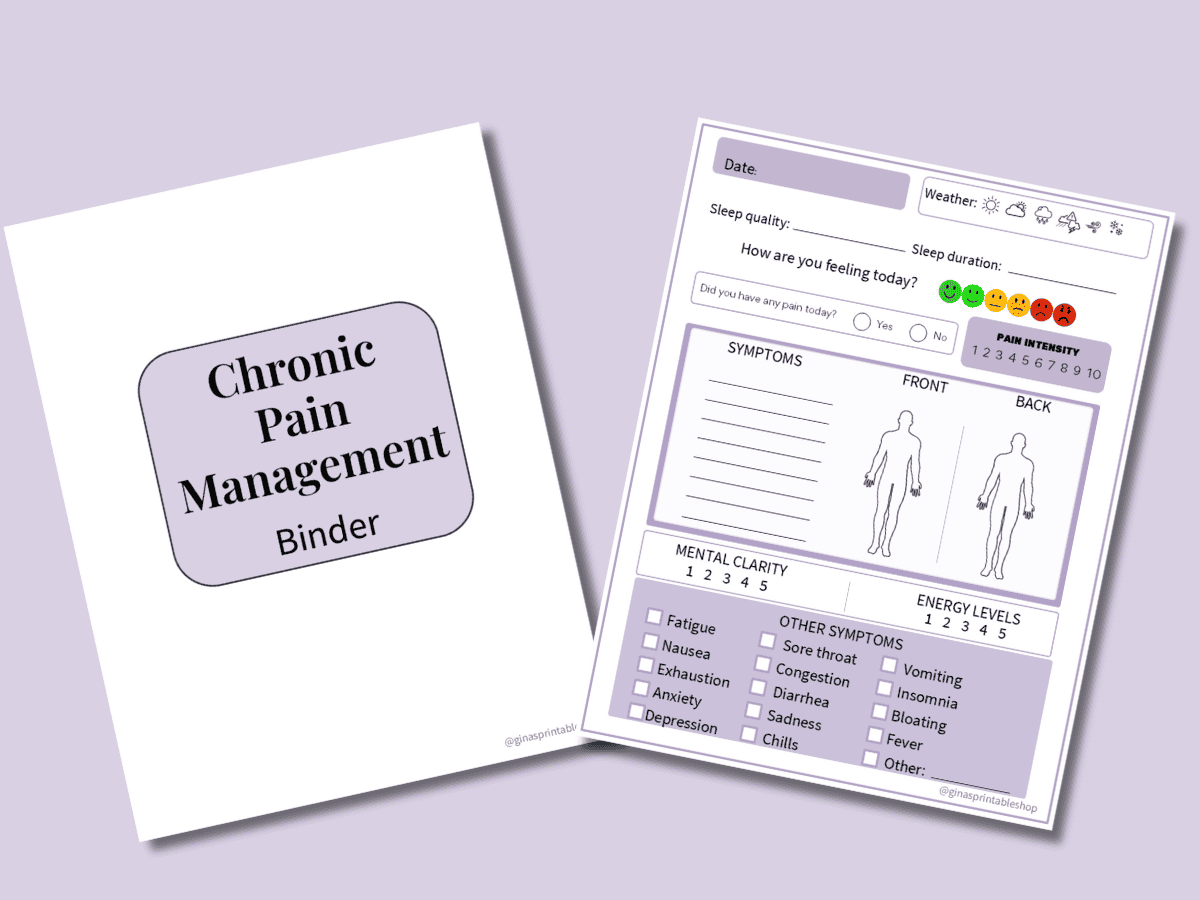
Daily pain tracker page
This page gives you a quick daily snapshot so you can track important details all in one place—things like pain level, symptoms, sleep, energy, mood, and mental clarity.

Front and back body pain maps
Instead of trying to describe pain with words, you can mark the exact location on a body chart. This is especially helpful when pain moves around or changes during flare-ups.

Pain triggers tracker
This page helps you track common trigger categories like:
- Food
- Sleep
- Weather
- Stress
- Movement
With space to write notes, so you can spot patterns over time.
Relief tracker
This is one of my favorites because it helps you keep track of what actually helps—whether that’s heat, rest, stretching, medication, hydration, or something else.

Medication log
A simple log to track:
- Medication name
- Date and time taken
- Notes and side effects
This is helpful for everyday use, and also great for emergencies. Having a medication list ready can make doctor visits (and ER visits) so much easier.

Appointment and consultation tracker
This page lets you record appointment details in one place, including:
- Date and time
- Location or contact info
- Notes from the visit
Doctor notes and questions
Because it’s so common to forget what you wanted to ask once you’re actually in the room.

Health professionals page
Keep all your provider contact details together—plus space for notes and treatments.

Flare day plan
This page is there for the moments when you’re flaring and don’t have the energy to figure out what to do next. It gives you a simple plan to follow when your body needs extra support.

Journal pages and wins/progress
Sometimes you need extra space for notes. Sometimes you need a place to brain-dump emotions. And sometimes you need a reminder that small wins still count.
This binder includes space for all of that.
How to use this binder without feeling overwhelmed
Here’s the truth: you don’t need to fill out every page every day.
Start small.
Here are a few simple ways to use it:
- Use the daily tracker page only on flare days
- Track medications daily, and everything else only as needed
- Keep the appointment tracker + doctor questions pages in your purse or binder pocket
- Print multiples of the pages you use most
- Start with just 2 pages: the daily tracker and medication log
Progress matters more than perfection.
Final thoughts
Living with chronic pain is hard. You’re already doing your best. This binder is simply a tool to make things easier—so you can keep track of what matters, feel more prepared for appointments, and understand your pain patterns over time.
If you’ve been wanting a calmer, more organized way to manage chronic pain, this Chronic Pain Management Binder Printable was made for you.
You can grab it here:
Follow Me On Social Media:


