

Pantry and Freezer Inventory Made Simple (Save Money, Eat What You Own)
This post may contain editorial samples and/or affiliate links. We earn a commission on your sales.
If dinner feels like a daily scramble, you are not alone. A simple pantry and freezer inventory can bring order, speed, and calm to your kitchen.
Think of it as a living list, what you have, where it is, and how much is left. It cuts duplicate buys, keeps food from hiding in the back, and helps you plan meals fast. It also means fewer last-minute runs to the store.
This guide keeps it simple with clear steps, examples, and easy habits. I also have a pantry and freezer inventory printable with shopping lists on my Etsy shop. Use that or any template you like. You can set this up in one hour, then do a weekly 10-minute reset.
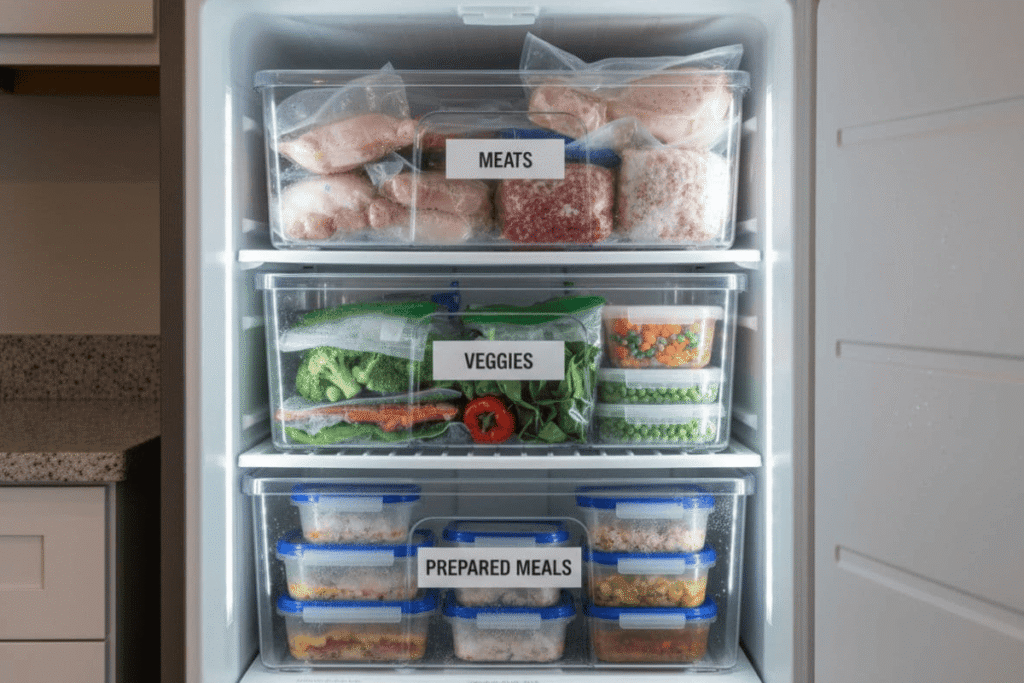
Table of Contents
Why a pantry and freezer inventory pays off at home
If you have ever bought another jar of sauce and later found two at home, this is for you. Food gets lost behind taller boxes. Frozen chicken slides under a bag of fries and stays there for months. Weeknight stress grows when you are staring at a shelf that looks full but holds no ready meal.
An inventory stops the guesswork. You see what you own, and you use it. That cuts waste and saves cash. It also reduces decision fatigue. Your brain does not need to track 80 items. The list does the job.
Quick wins show up fast. You can often spot three full meals from food you already own, like pasta bake, rice bowls, and tacos. You will toss less food. You will buy only what fills true gaps. With one simple habit, the weeknight rush feels lighter.
I do all of my grocery shopping online for delivery. Knowing what I have in the house, and what I need at my fingertips makes it so easy to make my grocery order. I live on a limited income and I do not have money to waste on groceries that go bad because I forgot that I had them. I also need to know I have all of the ingredients for any given recipe as well. There are also some low sodium pantry items I always keep hand and need to know if I’m running low on them.
Spot food waste before it happens
A pantry and freezer inventory helps you catch trouble before it turns into trash. Duplicates jump off the page. Near-expired items stand out. You can act in time, not after it is too late.
Set up an Eat First bin or basket. Put all soon-to-use items there. Mark them with a bright sticker. Keep that bin front and center.
Example: you find two open boxes of pasta and a half jar of marinara. Plan a baked pasta night. Add a handful of frozen spinach and the last of the shredded cheese. You just saved dinner and cleared space.
Save money at checkout with a smarter list
Check your inventory first, then write your list. Fill gaps only. Plan meals around what you own, not what looks good in the aisle.
Group your list by store section. Produce, dairy, meat, pantry, frozen. This keeps the trip short and helps you stay on track. A tight list, built from your inventory, also cuts impulse buys. Less guesswork means fewer extras landing in the cart.
Cut decision fatigue with go-to meal ideas
Keep a board or a note with 10 easy meals that fit your usual pantry and freezer items. Rotate them based on what needs to be used.
Here are a few ideas:
- Chili with canned beans and tomatoes, add ground beef or stay meatless.
- Rice bowls with frozen veggies, egg, and soy sauce or teriyaki.
- Breakfast for dinner, eggs, pancakes, or waffles with fruit.
- Pasta with jarred sauce, frozen broccoli, and sausage or chickpeas.
- Sheet pan chicken thighs with root veggies from the crisper.
Keep it simple. Pick meals your family already likes. You are building a reliable set of autopilot dinners.
Set up your pantry and freezer inventory in one hour
You do not need fancy tools or a full kitchen overhaul. One focused hour gets you set. The goal is clear names, fast sorting, basic labels, and one counting pass. Write clean item names, sizes, and counts so you can read and update them later. Then set par levels, the minimum amount you like to keep on hand for key staples.
Finish with a quick checklist so you can move to the weekly rhythm.
Grab your tools and printables (my Etsy inventory sheets included)
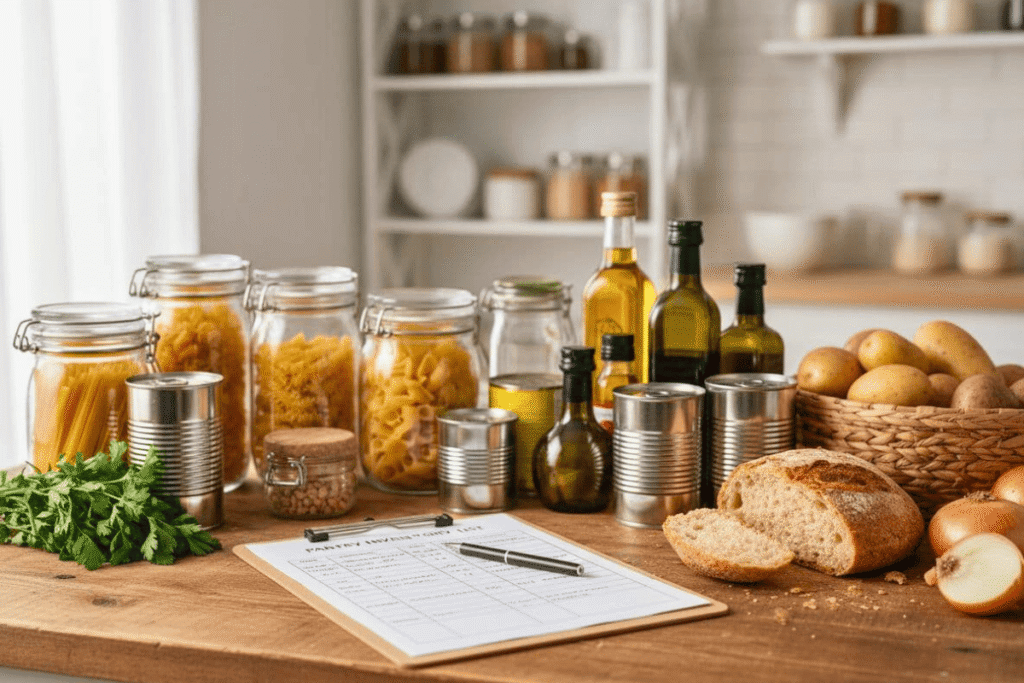
You need a few basic items:
- Pen, highlighter, and a marker
- Tape and simple labels or masking tape
- A timer to keep you moving
- A clipboard to hold your sheets
I have a pantry and freezer inventory printable with shopping lists on my Etsy shop. Use that if you want a ready sheet that matches this system. Any paper or a shared Google Sheet works too. Pick a format you will stick with.
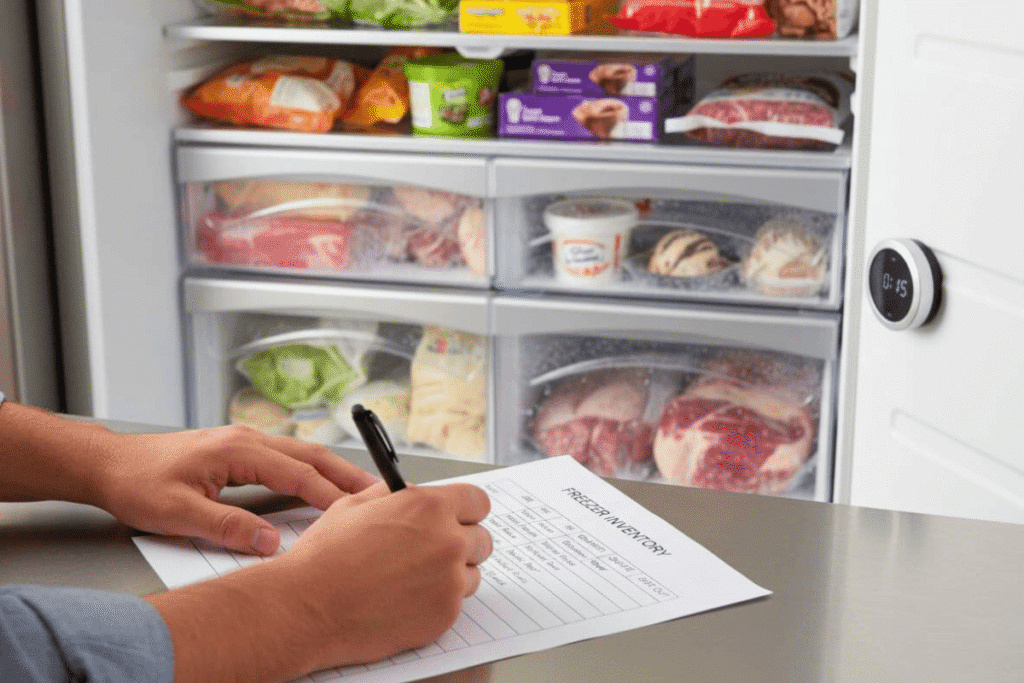
Sort by zones, then count once
Zones make counting fast and clear. Set them once, then reuse them each week.
Pantry zones to try:
- Baking
- Breakfast
- Snacks
- Cans and jars
- Oils and condiments
- Pasta and rice
Freezer zones to try:
- Proteins
- Veggies
- Fruit
- Bread and tortillas
- Leftovers and soups
- Ready meals
Work one zone at a time. Pull items forward, group like with like, and write them down. Item name, brand if useful, package size, and count. Keep it quick, not perfect. If you do not see a flavor or brand detail, skip it. You can always refine later.
Example entry:
- Black beans, 15 oz cans, 6
- Spaghetti, 16 oz boxes, 3
- Chicken thighs, family pack, 2
Label and date with simple rules
A clear label saves guesswork and waste. Use this easy format:
- Item name
- Opened date
- Date frozen if it goes in the freezer
Pick a simple date format like MM/DD/YY. Write the date on bags and containers with a marker. Keep the marker in the kitchen so updates take seconds.
Follow first in, first out. Put newer items behind older ones. Use freezer-safe bags or rigid containers. Press out air to prevent ice and flavor loss. Labels matter more than perfect handwriting. Consistency is what counts.
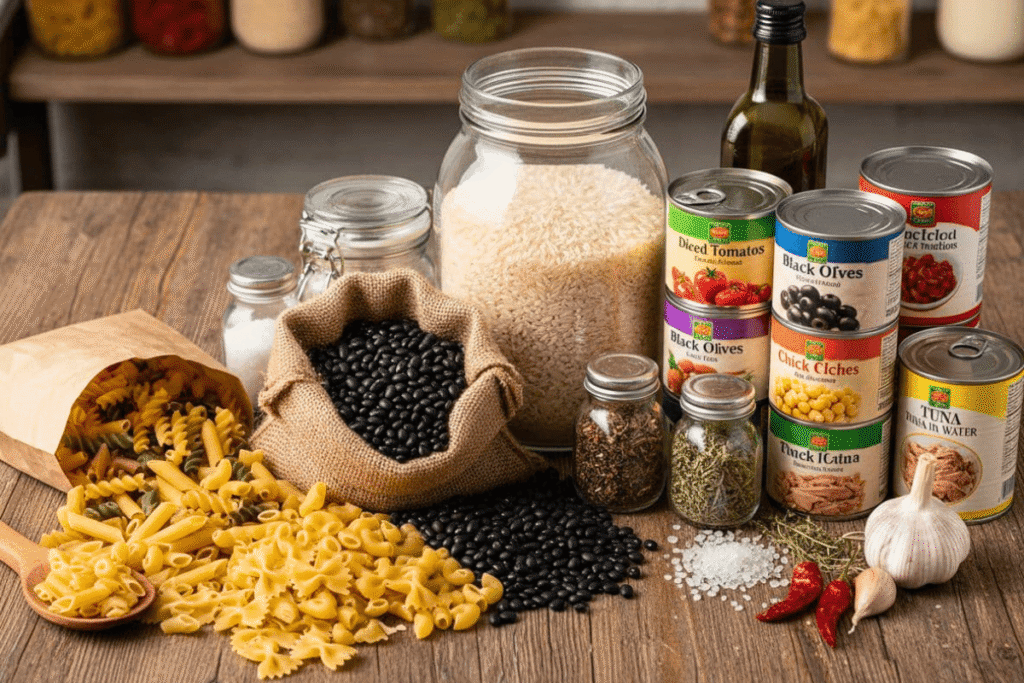
Set par levels so you never run out
A par level is the minimum amount you want to keep on hand. When you dip below par, you restock back to par. This creates a calm baseline, no last-minute flour runs when you want to bake.
Sample par levels you can start with:
| Item | Par Level |
|---|---|
| Rice | 2 pounds |
| Pasta | 3 boxes |
| Diced tomatoes | 4 cans |
| Chicken thighs | 2 family packs |
| Frozen veggies | 4 bags |
| Black beans | 6 cans |
| Broth | 4 cartons |
| Shredded cheese | 2 bags |
Set your own based on use. Big pasta eaters may keep 6 boxes. Small households may keep 1 family pack of chicken. The rule is simple, buy up to par, not beyond.
Quick recap checklist:
- Gather tools and choose a template
- Set pantry and freezer zones
- Count each zone once
- Label and date open or frozen items
- Write par levels for your top staples
Keep your inventory updated with simple weekly habits
A light routine keeps this system alive. Tie it to a trigger you already do, like the night before grocery day or while your coffee brews on Sunday. You will scan, adjust counts, and plan meals in minutes. Make it easy, make it obvious, and your list stays useful.
Do a 10-minute reset before you shop
Pick a set time each week. Open the pantry and freezer. Scan each zone and adjust counts. Circle anything low or under par. Check dates on a few older items and move them to the front. Keep your pen and sheet on a clipboard right there, so updates take seconds.
If you missed a week, reset anyway. Done beats perfect.
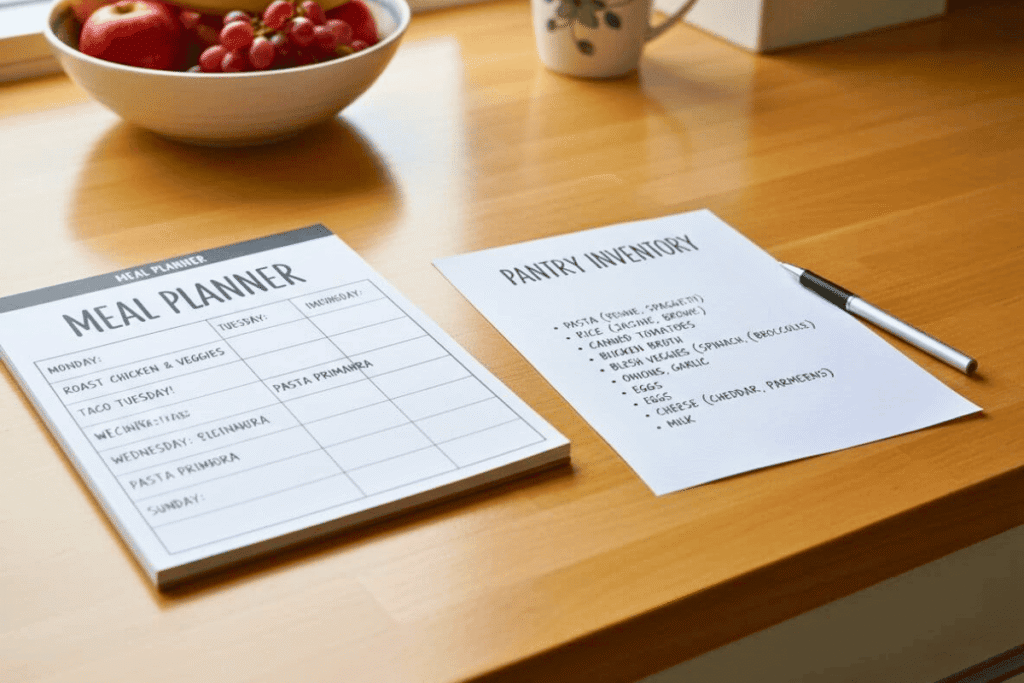
Plan meals from what you already have
Use your inventory to pick 4 to 7 meals. Start with items close to their date. Note sides that match what is on hand. Add only missing pieces to your list.
Example:
- Chili, use 2 cans beans and 1 can tomatoes, buy onion
- Chicken stir-fry, use thighs and frozen veggies, buy fresh ginger
- Pasta bake, use pasta and sauce, buy ricotta
- Breakfast for dinner, use eggs and frozen hash browns, buy fruit
This habit alone saves time and money every week. You plan faster, cook what you have, and reduce waste.
Having a meal plan for the week helps you to know what is for dinner and plan out your meals better. Sign up for my newsletter to receive a free weekly meal plan with a shopping list.
Track what your family really eats, then tweak
After two weeks, look at patterns. What runs out fast, what lingers. Raise par levels for favorites. Lower them for slow movers. If something sits for a month, stop buying it for now. Leave small notes on the sheet, like kid loves turkey meatballs, or skip lentils, no one eats them.
The list becomes a mirror for how your home eats in real life.
Make it a house rule and keep tools close
Post three short rules on the pantry door:
- Write it down when you take the last one.
- Date it when you open it.
- Put new stock behind old stock.
Keep a pen, tape, and marker within reach. When tools live next to the habit, people use them. The system holds without nagging.
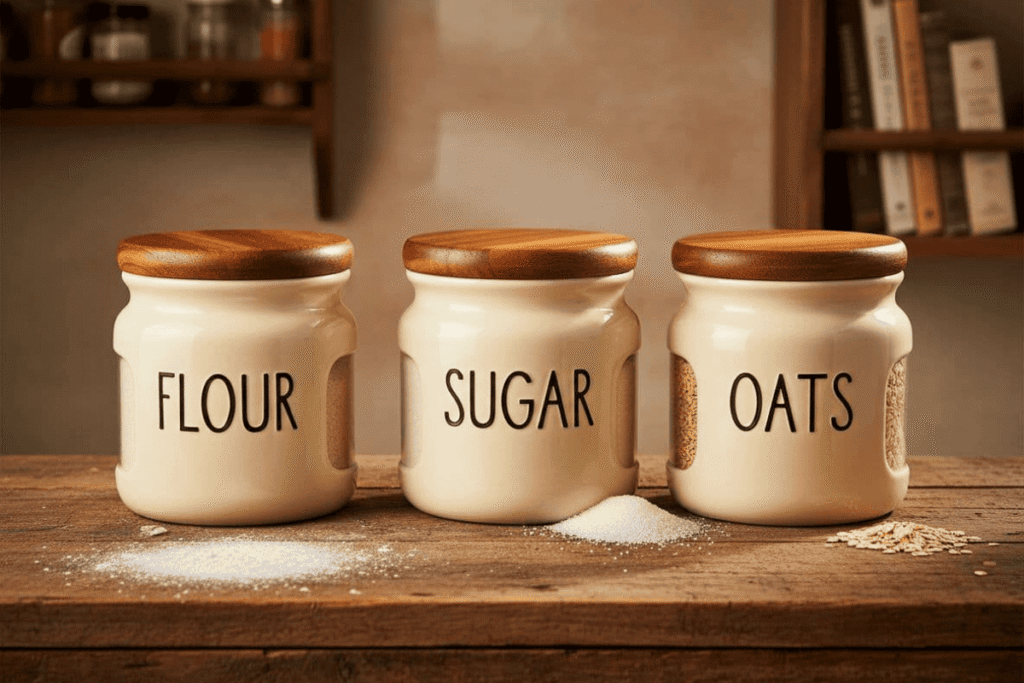
Store food right to protect your pantry and freezer inventory
Good storage stretches food life and keeps quality high. Focus on packaging, temperature, and rotation. If you are unsure about safety, check official guidance from reliable sources. For daily life, use these simple steps.
Freezer packaging that prevents ice and flavor loss
Let hot food cool before freezing. Portion into meal sizes so you can thaw only what you need. Use freezer bags or rigid containers, press out air, and label clearly. Lay bags flat to freeze, then stand or stack them like files. Keep a short list of freezer contents near the door to reduce open time and keep cold air in.
Tip: double bag soups or sauces if you see leaks. A little care now saves a messy cleanup later.
Pantry storage that keeps food fresh and pest free
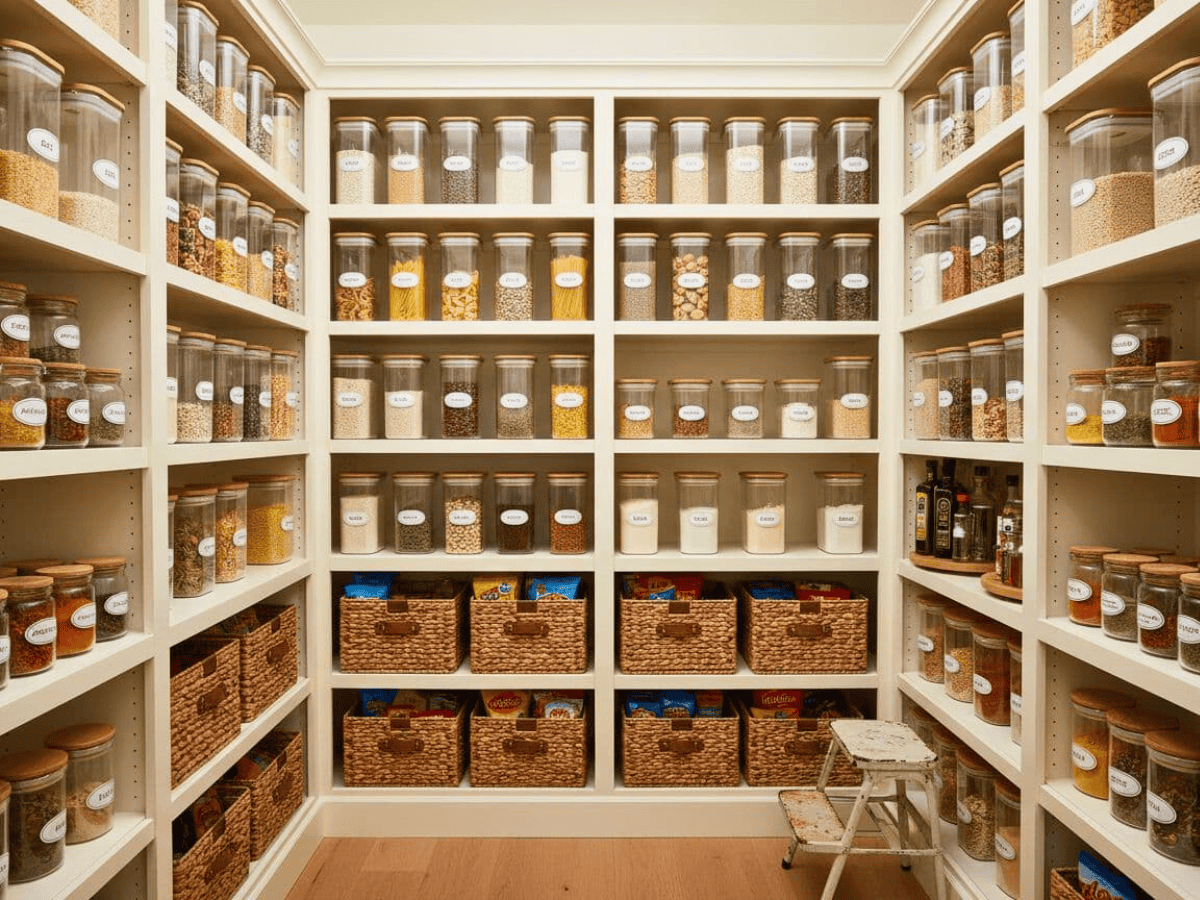
Use airtight containers for flour, rice, sugar, cereal, and snacks. Clear bins show levels at a glance. Wipe shelves and keep them dry. Do not overcrowd, air flow helps. Store oils in a cool, dark spot to slow off flavors. If you live in a warm area, consider freezing nuts and seeds to preserve freshness.
What to freeze and what to skip
Good to freeze: bread, tortillas, cooked rice, broth, butter, raw meat, shredded cheese, fruit for smoothies, many veggies after a quick blanch.
Skip or use with care: lettuce, cucumbers, sour cream, cream-heavy sauces. They can turn watery or grainy. Try swaps that freeze well. For example, freeze pesto in cubes if your fresh herbs are fading. Freeze tomato paste in tablespoons. Freeze lemon juice in ice trays for quick flavor hits.
Simple rotation that anyone can follow
Keep oldest items in front, newest in back. Use colored dots or a highlighter color by month to mark older stock. Add a small calendar reminder each month to check the deep back areas. Make rotation part of your 10-minute reset so it never turns into a big job.
If an item is close to its date, move it to your Eat First bin and plan a meal around it this week.
Conclusion
A simple pantry and freezer inventory saves money, cuts waste, and speeds meal planning. One focused hour gets you set, a weekly 10-minute reset keeps it humming. Try it for 30 days and watch the stress drop at dinner time. If you want a ready-to-use template, grab my pantry and freezer inventory printable with shopping lists on my Etsy shop. Start today with what you already own, and let your kitchen work for you.
Follow Me On Social Media:


