

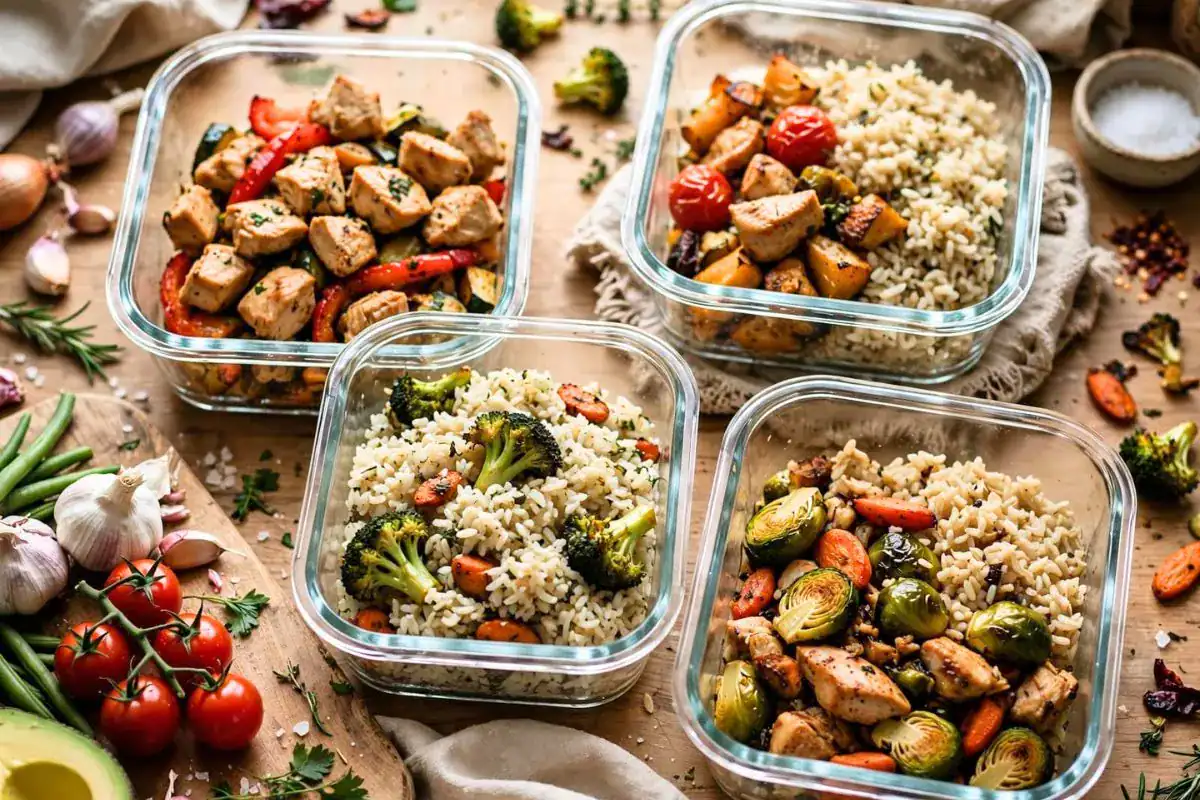
Batch Cooking With Chronic Illness: 7 Easy Tips to Save Energy
This post may contain editorial samples and/or affiliate links. We earn a commission on your sales.
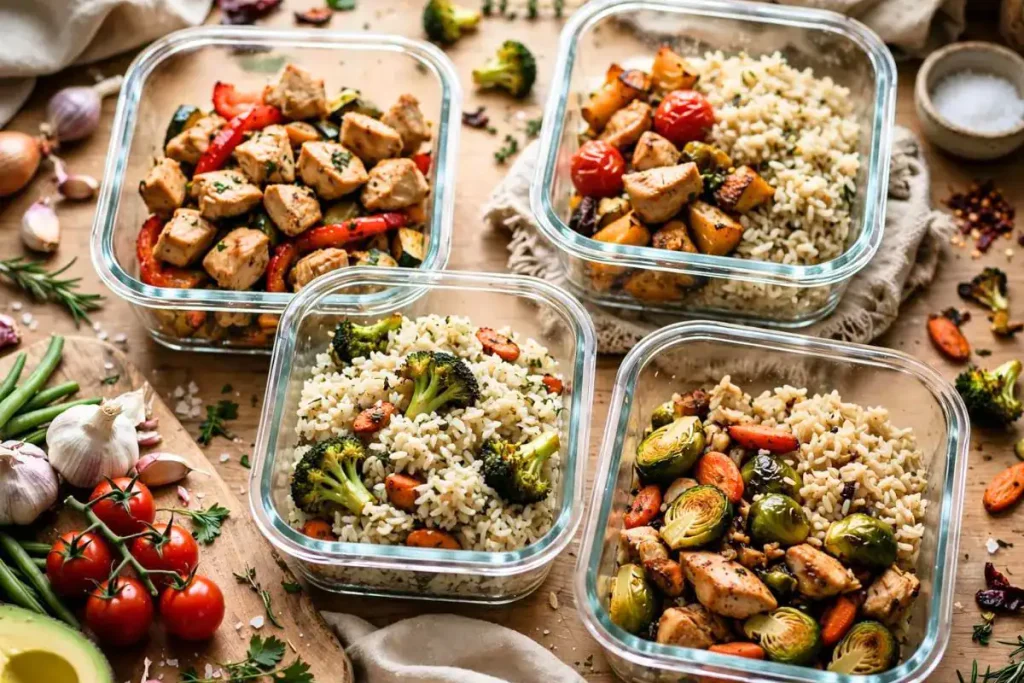
Cooking dinner isn’t always an easy task, especially when you’re living with chronic illness or chronic pain. Between deciding what to make, preparing the ingredients, cooking, and cleaning up afterward, it can take quite a bit of energy.
And when you’re already dealing with pain or fatigue, spending a lot of time in the kitchen isn’t always realistic.
That’s one of the reasons I’ve found batch cooking and preparing meals ahead of time so helpful.
I try to prepare food ahead whenever I can because I know my physical limitations. I’ve learned that breaking things into smaller tasks and taking breaks when I need them makes it easier for me to prepare healthier meals without overdoing it.
It’s one of those lifestyle adjustments you learn to make when you’re living with chronic illness or chronic pain.
The nice thing about batch cooking is that you don’t have to spend an entire day in the kitchen preparing meals for the week. Even doing a little extra preparation when you’re feeling up to it can make things easier later.
In this post, I’m sharing how batch cooking can help you save time and energy, along with practical ways to make it work when you have physical limitations.
Table of Contents
What Is Batch Cooking?
Batch cooking is simply preparing larger amounts of food at one time so you have meals or ingredients ready to use later.
For example, instead of cooking enough chicken for one dinner, you might prepare extra chicken to use in different meals throughout the week.
You could also make a large pot of soup, divide it into smaller portions, and freeze some for another day.
The idea is to reduce the amount of time and effort you spend preparing food throughout the week.
Some people prefer to prepare complete meals that can go straight into the freezer. Others cook individual ingredients that can be combined into different dishes.
Both approaches work.
And if you have a chronic illness, you can adjust the process to fit your energy levels and physical abilities.
You don’t need a complicated system, expensive equipment, or an entire freezer filled with meals.
Even preparing one extra meal can make your week a little easier.
Why Batch Cooking Is Helpful When You Have a Chronic Illness
Living with a chronic illness often means making adjustments to everyday activities that other people might not think twice about.
Something as ordinary as cooking dinner can require more energy than you have available.
There may be days when your symptoms are manageable and you can accomplish several things around the house. Then there are days when pain or fatigue makes even simple tasks difficult.
Unfortunately, we still need to eat on those days.
That’s where having food prepared ahead of time becomes especially helpful.
1. It Helps You Manage Your Energy
When you live with chronic illness, energy can be unpredictable.
You might wake up feeling pretty good, only to find yourself exhausted a few hours later.
Or you might have a day when you’re dealing with a flare-up and don’t have the energy to stand in the kitchen.
Preparing food ahead of time allows you to take advantage of the days when you’re feeling better without assuming you’ll feel that way every day.
For example, if you’re already cooking ground turkey for dinner, you could prepare a little extra and freeze it for another meal.
You’re completing one task but getting more than one meal out of it.
That can be especially helpful when you’re trying to manage your energy throughout the day.
2. It Can Reduce Time Spent Standing
Standing for long periods can be difficult when you have chronic pain, back problems, arthritis, or other physical limitations.
And cooking often involves more standing than we realize.
There’s the preparation, the actual cooking, serving the food, and then cleaning up afterward.
By preparing certain ingredients ahead of time, you can reduce the amount of work required when it’s time to make dinner.
You might chop vegetables while sitting at the kitchen table, cook a protein earlier in the day, or prepare a casserole in stages.
You don’t have to complete every part of a meal at the same time.
That’s something I’ve learned to appreciate.
3. It Makes Healthier Meals More Manageable
One of the challenges of living with chronic illness is trying to eat healthier when you don’t always have the energy to cook.
It’s easy to reach for whatever is convenient when you’re exhausted or hurting.
And sometimes convenience food is exactly what you need.
But having a few prepared ingredients or meals available can make it easier to choose foods that fit your personal dietary needs.
For example, you could have cooked chicken, rice, and vegetables ready to combine into a quick dinner.
If you need to watch your sodium intake or follow a specific eating plan, preparing your own meals also gives you more control over the ingredients.
Of course, everyone’s dietary needs are different, especially when managing certain medical conditions.
The goal isn’t to follow a perfect diet. It’s to make preparing meals that work for you a little easier.
4. It Reduces Everyday Decision Fatigue
Have you ever reached the end of the day and realized you have absolutely no idea what to make for dinner?
I think most of us have experienced that.
But when you’re also dealing with chronic pain, fatigue, or brain fog, making another decision can feel overwhelming.
Having a few prepared meals takes some of that pressure away.
Instead of trying to figure out what to cook, you can look at what you’ve already prepared and choose something that sounds good.
It doesn’t eliminate every decision, but it can make evenings feel less stressful.
5. It Can Help You Save Money and Reduce Food Waste
Another benefit of batch cooking is making better use of the groceries you already have.
When you plan meals around ingredients that can be used more than once, you’re less likely to forget about food sitting in the refrigerator.
For example, a package of chicken could become dinner one evening, chicken and rice bowls another day, and an ingredient in soup later in the week.
You can also freeze extra portions before they spoil.
Buying larger packages isn’t always cheaper, though, so I recommend comparing unit prices and purchasing only what you know your household will use.
Saving money is helpful, but wasting food because you prepared too much defeats the purpose.
How I Make Batch Cooking Work With My Physical Limitations
One thing I’ve learned from living with chronic illness and chronic pain is that I can’t always approach everyday tasks the same way someone without those limitations might.
I have to think about what my body can realistically handle.
That includes cooking.
I try to batch cook or prepare ingredients ahead of time whenever possible because it makes preparing healthier meals easier for me.
But that doesn’t mean spending hours in the kitchen cooking everything for the week.
In fact, that approach would probably leave me feeling worse.
Instead, I prefer breaking things down into smaller tasks.
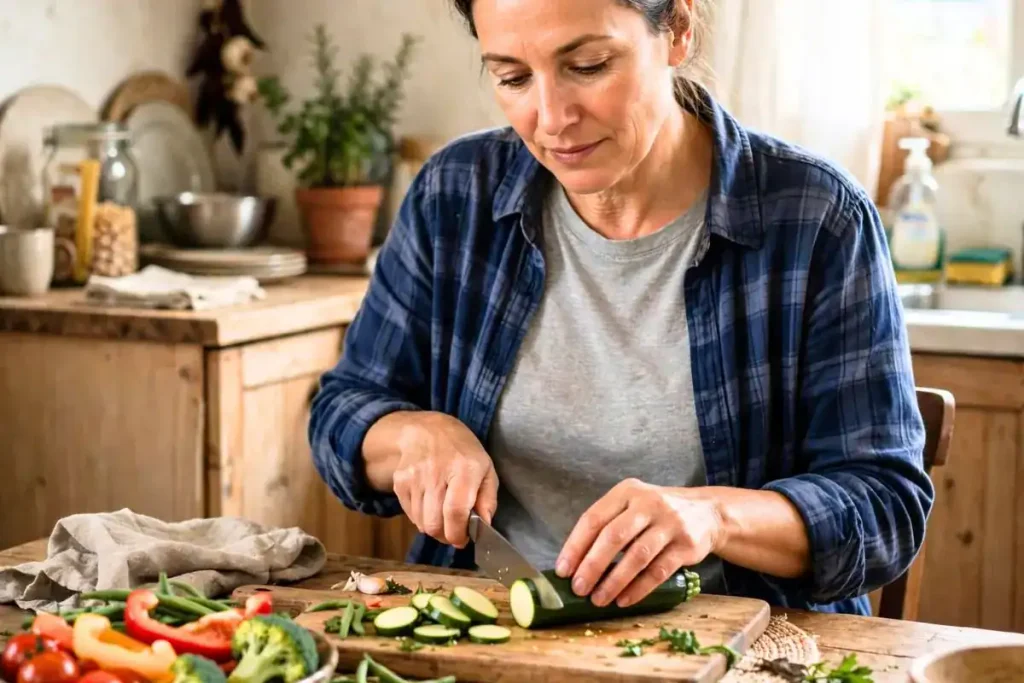
I might plan meals one day, prepare some ingredients another day, and cook extra portions when I’m already making dinner.
Taking breaks is part of the process.
Some days I can accomplish more than others, and I’ve learned that it’s important to recognize when I need to stop.
Living with chronic illness means making adjustments, and sometimes those adjustments involve changing how we do things we’ve been doing our entire lives.
I don’t look at preparing meals in smaller steps as doing less.
I look at it as finding a way to continue doing something important without making my symptoms worse.
And if you’re dealing with similar limitations, I encourage you to find a routine that works for your body instead of trying to follow someone else’s idea of what meal preparation should look like.
How to Start Batch Cooking Without Overdoing It
If you’ve never tried batch cooking before, the idea of preparing several meals at once might sound overwhelming.
But you don’t have to start with several meals.
Actually, I recommend starting small, especially if you have limited energy.
Start With One Meal
Choose one meal your family already enjoys.
It could be chili, soup, meatloaf, or a casserole.
The next time you prepare it, make enough for an additional meal if the recipe is easy to double.
Serve one portion for dinner and freeze the rest.
Now you have a meal ready for another day without needing to plan an entirely separate cooking session.
Prepare Ingredients Instead of Complete Meals
Sometimes preparing a complete meal ahead of time isn’t practical.
That’s perfectly fine.
You can still save time by preparing individual ingredients.
For example:
- Wash and chop vegetables.
- Cook extra chicken or ground turkey.
- Prepare rice or another grain.
- Portion ingredients for slow cooker meals.
- Mix seasonings for recipes you plan to make.
- Divide meat into recipe-sized portions before freezing.
These small tasks can make cooking easier later.
And you don’t have to complete them all in one day.
Use Short Preparation Sessions
If standing or working in the kitchen causes pain, try dividing your preparation into shorter sessions.
Maybe you can comfortably work for 10 or 15 minutes before needing a break.
That’s enough time to accomplish something useful.
You could prepare vegetables in the morning and assemble dinner later in the afternoon.
Or you might cook one ingredient, rest, and finish the meal when you’re feeling up to it.
The important thing is to work within your limitations rather than pushing yourself to finish everything.
Plan Around Your Energy, Not Just Your Schedule
Traditional meal planning often focuses on what you’re going to eat each day.
But when you live with chronic illness, I think it’s just as important to consider how much energy preparing those meals will require.
For example, you might plan:
- Two very easy meals that require minimal preparation.
- Two meals using ingredients you’ve already cooked.
- One slow cooker or Instant Pot meal.
- One meal made from leftovers.
- One flexible day for whatever works best.
You can move meals around depending on how you’re feeling.
There’s no rule saying you have to make Tuesday’s planned dinner on Tuesday.
Your meal plan should work for you, not become another thing you’re struggling to keep up with.
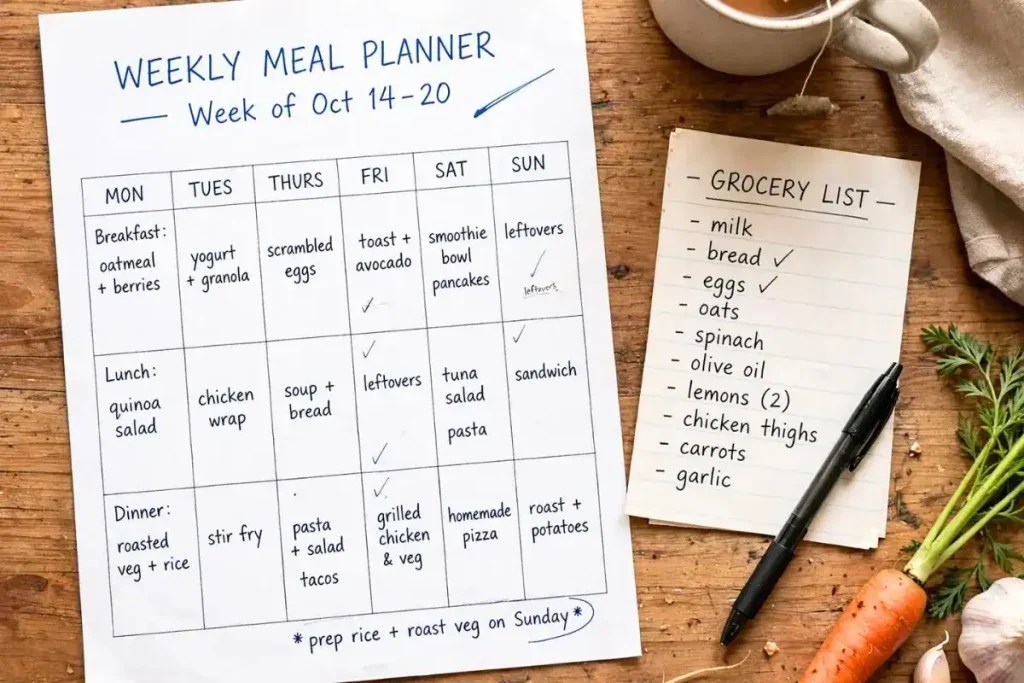
Having a meal plan for the week helps you to know what is for dinner and plan out your meals better. Sign up for my newsletter to receive a free weekly meal plan with a shopping list.
Planning meals ahead of time can help take some of the guesswork out of grocery shopping and cooking.
If you’d like a simple place to organize your meals and groceries, you can grab my free Meal Planner With Shopping List.
It’s a helpful starting point for planning what you need without making the process more complicated.
Easy Batch Cooking Ideas for Low-Energy Days
You don’t need complicated recipes to make preparing meals ahead of time worthwhile.
I think the best options are foods you already enjoy, use regularly, and can prepare without too much effort.
Here are a few ideas to consider.
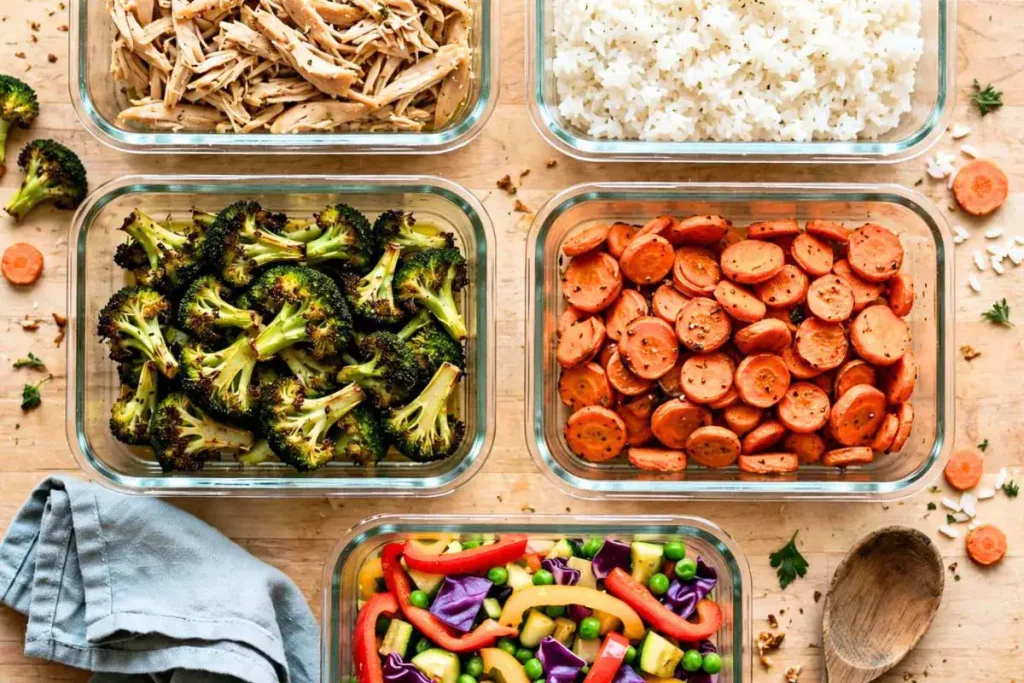
Cook Extra Protein
Chicken, ground turkey, and other proteins can be prepared ahead of time and used in several different meals.
For example, cooked chicken could be used in:
- Chicken and rice bowls
- Wraps or sandwiches
- Soups
- Casseroles
- Salads
You can season portions differently depending on what you’re making.
Just be sure to store everything properly and follow safe refrigeration and freezing guidelines.
Make Soup or Chili
Soup is one of my favorite examples of a meal that works well for cooking in larger quantities.
You can prepare a pot, enjoy some for dinner, and freeze individual servings.
It’s also easy to adjust recipes based on your dietary needs and the ingredients you have available.
If you follow a lower-sodium eating plan, homemade soup allows you to choose the broth and seasonings you use.
And on a day when you’re not feeling well, having a portion ready to reheat can be especially convenient.
Prepare Freezer-Friendly Casseroles
Casseroles can be helpful because they combine several ingredients into one dish.
Some can be assembled ahead of time and refrigerated or frozen until you’re ready to cook them.
Others are better cooked first and frozen in individual portions.
Check the specific recipe for freezing and reheating instructions, since not every casserole freezes equally well.
Make Extra Rice or Grains
Preparing rice or another grain ahead of time can make putting meals together faster.
You could use it as a side dish, add it to a bowl with protein and vegetables, or incorporate it into a casserole.
Cooked rice needs careful handling because bacteria can grow if it sits at unsafe temperatures.
Cool it promptly in shallow containers, refrigerate it within two hours, and use or freeze it within the recommended storage period.
Prepare Breakfast Ahead of Time
Dinner isn’t the only meal that can benefit from preparation.
Breakfast can be difficult on mornings when you’re already dealing with fatigue or pain.
Depending on your dietary needs, you might prepare:
- Individual portions of baked oatmeal
- Breakfast muffins
- Freezer-friendly breakfast sandwiches
- Washed fruit
- Overnight oats
Even having one part of breakfast ready can make mornings a little easier.
Helpful Kitchen Tools for Batch Cooking With Chronic Pain
You don’t need to purchase a bunch of new kitchen gadgets to get started.
However, certain tools can make food preparation easier, especially when standing, lifting, or repetitive movements cause discomfort.
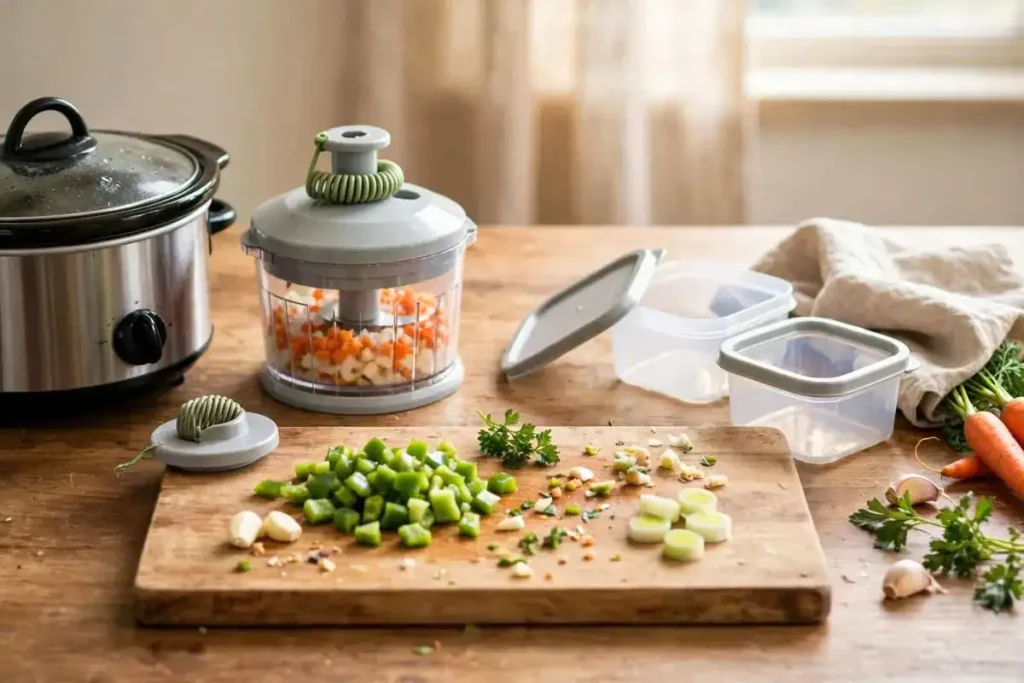
Slow Cooker
A slow cooker can be helpful because many recipes require very little hands-on cooking.
You can prepare the ingredients, add them to the cooker, and allow the meal to cook while you focus on other things.
Some recipes require browning meat or completing other steps first, so look for meals with preparation requirements that fit your abilities.
Instant Pot or Electric Pressure Cooker
An Instant Pot can be useful for preparing certain foods without needing to watch a pot on the stove.
It’s especially convenient for recipes such as soups, stews, and some proteins.
Keep in mind that pressure cookers still require preparation, safe handling, and cleanup.
They’re a tool to make cooking easier, not something that completely eliminates the work.
Food Chopper
Chopping vegetables can be difficult when you’re dealing with hand pain, arthritis, or fatigue.
A food chopper may help reduce repetitive cutting.
Choose one that’s comfortable for you to operate and easy to clean.
Lightweight Storage Containers
Storage containers are essential when preparing meals ahead of time.
I recommend choosing containers that are easy to open, close, and handle.
If you have trouble gripping things or lifting heavy items, lightweight containers may be more practical than large glass ones.
Smaller containers can also make portioning and reheating easier.
A Comfortable Place to Sit
This might be one of the most useful adjustments you can make.
If you can safely prepare ingredients while sitting, consider using your kitchen table or another comfortable workspace.
You don’t have to stand for every part of cooking.
Just make sure your setup allows you to work safely, especially when using sharp utensils or handling hot food.
How to Organize Batch Cooking When You Have Limited Energy
One of the biggest mistakes you can make is trying to prepare too much food at once.
It might seem productive to spend an entire day cooking, but if you end up exhausted or in more pain afterward, that approach may not be sustainable.
Instead, think about dividing the process into manageable steps.
Step 1: Choose a Few Simple Meals
Start with two or three meals you already know how to make.
Try to choose recipes that use some of the same ingredients.
For example, chicken could be used in soup and rice bowls.
This helps reduce the number of ingredients you need to purchase and prepare.
Step 2: Make Your Grocery List
Before shopping, check your pantry, refrigerator, and freezer.
You might already have some of the ingredients you need.
Write down what’s missing and organize your list in a way that makes shopping easier.
If grocery shopping is physically difficult, consider grocery pickup or delivery when it’s available and fits your budget.
Step 3: Divide the Preparation Into Smaller Tasks
You don’t have to shop, wash vegetables, chop ingredients, and cook everything on the same day.
In fact, I would avoid that if you struggle with pain or fatigue.
You might use one day for planning, another for shopping, and another for preparing food.
You can even spread preparation throughout the week.
Step 4: Cook Extra When It Makes Sense
Instead of setting aside an entire day for meal preparation, try making extra food when you’re already cooking.
If you’re preparing a recipe that freezes well, doubling it may be a simple way to get ahead.
Just remember that larger quantities can mean heavier pots, more cleanup, and longer preparation times.
If doubling a recipe makes the task too difficult, don’t do it.
Step 5: Store and Label Your Food
Once your food is prepared, divide it into portions that make sense for your household.
Label each container with the name of the meal and the date it was prepared.
This makes it easier to keep track of what you have available.
Step 6: Give Yourself Permission to Rest
This step is just as important as the others.
If you need a break, take one.
If you don’t finish everything you planned, that’s okay too.
Just be mindful of food safety. Refrigerate perishable ingredients promptly rather than leaving them out while you rest.
The purpose of preparing meals ahead of time is to make life easier, not to create another exhausting chore.
A Simple Meal Prep Routine for Chronic Illness
If you’re having trouble figuring out where to begin, here’s an example of how you could spread food preparation throughout the week.
| Day | Small task |
|---|---|
| Monday | Choose three easy meals for the week |
| Tuesday | Make your grocery list and check ingredients |
| Wednesday | Shop or arrange grocery pickup |
| Thursday | Wash or chop vegetables |
| Friday | Cook extra protein for another meal |
| Saturday | Prepare and freeze one extra meal |
| Sunday | Rest or catch up only if you feel up to it |
This is only an example.
You don’t need to follow a specific schedule, and you certainly don’t have to prepare food every day.
Some weeks you may have more energy than others.
The goal is to find a routine that helps you without leaving you feeling overwhelmed.
Make Meal Preparation Easier With a Printable Guide
Sometimes the hardest part of meal preparation isn’t the cooking itself.
It’s figuring out where to start and how to organize everything without getting overwhelmed.
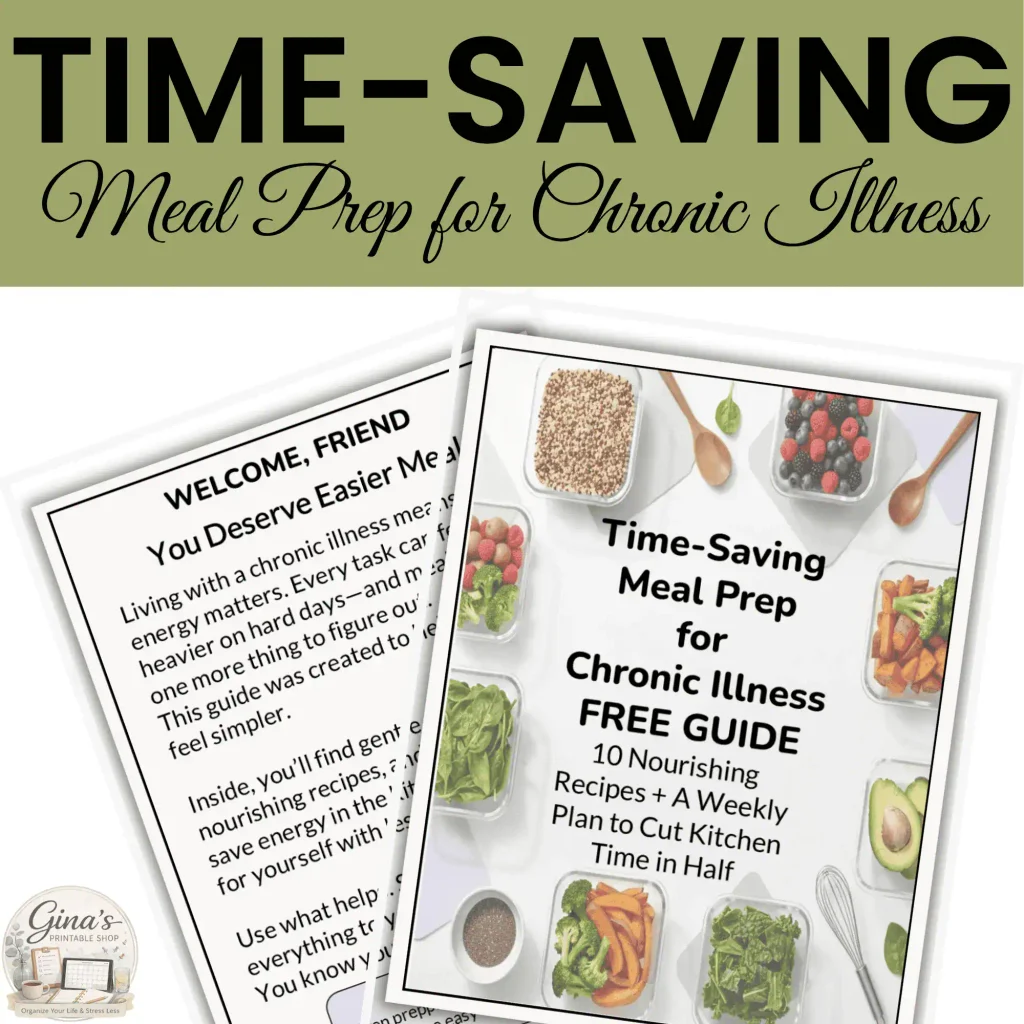
That’s one of the reasons I created my Time-Saving Meal Prep for Chronic Illness Printable Guide.
I wanted to offer a resource specifically for people who need to approach everyday cooking a little differently because of chronic illness, fatigue, or physical limitations.
When you’re trying to manage your health and keep up with everyday responsibilities, having a little extra structure can be helpful.
This printable guide is designed to support a more manageable approach to preparing meals, without expecting you to spend hours in the kitchen.
If you’ve been wanting to get more organized with meal preparation but aren’t sure where to begin, it’s worth taking a look.
Food Safety Tips for Batch Cooking and Freezing Meals
Preparing meals ahead of time can be convenient, but it’s important to store food safely.
Here are a few basic guidelines to remember.
Refrigerate Food Promptly
Perishable cooked food should generally be refrigerated or frozen within two hours.
If the surrounding temperature is above 90°F, that time drops to one hour.
Divide large amounts of food into smaller, shallow containers so they cool more quickly.
You don’t need to leave food sitting on the counter until it reaches room temperature.
Know How Long Leftovers Last
Most cooked leftovers can be stored in the refrigerator for three to four days when kept at 40°F or below.
If you don’t plan to eat them within that time, freezing is usually a better option.
Food stored continuously at 0°F remains safe indefinitely, although its quality may decline over time.
Many cooked meals maintain their best quality for approximately two to three months in the freezer, depending on the ingredients.
Thaw Meals Safely
The safest ways to thaw frozen food include using the refrigerator, cold water, or a microwave.
If using cold water, keep the food in leakproof packaging, change the water every 30 minutes, and cook it immediately after thawing.
Food thawed in the microwave should also be cooked immediately.
Avoid thawing frozen meals on the kitchen counter.
Reheat Food Thoroughly
Most leftovers should be reheated to an internal temperature of 165°F.
A food thermometer can help you check that your meal has reached a safe temperature.
Following these guidelines can help you enjoy the convenience of prepared meals while reducing food safety risks.
Frequently Asked Questions About Batch Cooking
Is Batch Cooking the Same as Meal Prep?
They’re similar, but there is a difference.
Meal prep is a general term for preparing food ahead of time. It might involve washing vegetables, portioning snacks, or assembling ingredients.
Batch cooking usually means preparing larger quantities of food so you have multiple servings available.
You can use both methods together.
For someone living with chronic illness, combining the two can be especially helpful because you can choose which tasks are manageable on a particular day.
Can I Batch Cook If I Have Very Little Energy?
Yes, but you may need to adjust your expectations.
You don’t have to prepare several complete meals.
Start with something small, such as cooking an extra portion of dinner or washing vegetables ahead of time.
If you’re experiencing a particularly difficult flare-up, it may be better to rest and use whatever convenient food options are available.
Preparing meals ahead of time should support your health, not make your symptoms worse.
How Many Meals Should I Prepare at Once?
There’s no specific number.
Some people enjoy preparing an entire week’s worth of meals, while others prefer having one or two extra meals available.
I think starting with one additional meal is a good approach.
Once you see how much energy the process requires, you can decide whether preparing more makes sense.
What Foods Are Best for Freezing?
Soups, chili, stews, cooked meatballs, and many casseroles are good options.
Some foods don’t freeze as well because their texture changes after thawing.
For example, certain cream-based sauces, raw vegetables with high water content, and some dairy products may separate or become watery.
It’s always helpful to check whether a recipe is freezer-friendly before preparing a large amount.
Is Batch Cooking Worth It for One Person?
Absolutely.
If you live alone, preparing extra portions can be especially convenient.
Instead of eating the same meal several days in a row, you can freeze individual servings and rotate them throughout the month.
This gives you more variety without needing to cook something new every day.
What If My Chronic Illness Requires a Special Diet?
Preparing food at home can make it easier to control ingredients, but it’s important to follow the dietary recommendations you’ve received from your healthcare team.
For example, someone managing kidney disease may have different nutritional needs than someone following a general low-sodium diet.
Choose recipes and ingredients that work for your individual health needs.
And remember, you can still use convenience ingredients when they fit your eating plan.
Final Thoughts: Make Cooking Work for Your Life
One of the biggest lessons I’ve learned from living with chronic illness is that sometimes you have to change how you approach everyday tasks.
That doesn’t mean giving up on doing the things that matter to you.
It means finding ways to make them more manageable.
For me, preparing food ahead of time is one of those adjustments.
I know my physical limitations, and I know that trying to accomplish too much at once can leave me in more pain.
Breaking cooking into smaller tasks, taking breaks, and having meals ready for difficult days helps me make healthier choices without putting so much pressure on myself.
Some weeks I can prepare more food than others.
And that’s okay.
You don’t have to fill your freezer with homemade meals or follow an elaborate meal preparation schedule to benefit from planning ahead.
Start with one meal. Prepare one ingredient. Make an extra portion of something you’re already cooking.
Those small steps can make a difference when you’re having a difficult day.
I’d love to know: Do you prepare meals ahead of time, or is this something you’ve been wanting to try? What’s the biggest challenge you face when it comes to cooking with chronic illness or chronic pain?
Share your thoughts in the comments. I’d love to hear what works for you.
Follow Me On Social Media:

Hi, I’m Gina — the creator behind Chronically Gina and Gina’s Printable Shop.
I create practical printables, wellness tools, and encouraging content to help make everyday life feel more manageable. Living with chronic illness has inspired me to share realistic routines, organization tips, meal planning ideas, and supportive resources for busy women, families, caregivers, and teachers.
My goal is to help you feel less overwhelmed and more supported with simple systems that work for real life — not perfection.
