

Hobbies for Stress Relief: 35 Easy Ideas for Low-Energy Days
This post may contain editorial samples and/or affiliate links. We earn a commission on your sales.
Some days feel heavier than others. Maybe you’ve had a stressful week, didn’t sleep well, or you’re simply running low on physical or mental energy. On those days, even activities you normally enjoy can feel like another item on your to-do list. That’s why finding the right hobbies for stress relief can make such a meaningful difference. Instead of asking more from yourself, the right hobby gives you permission to slow down, recharge, and enjoy a few peaceful moments without pressure.
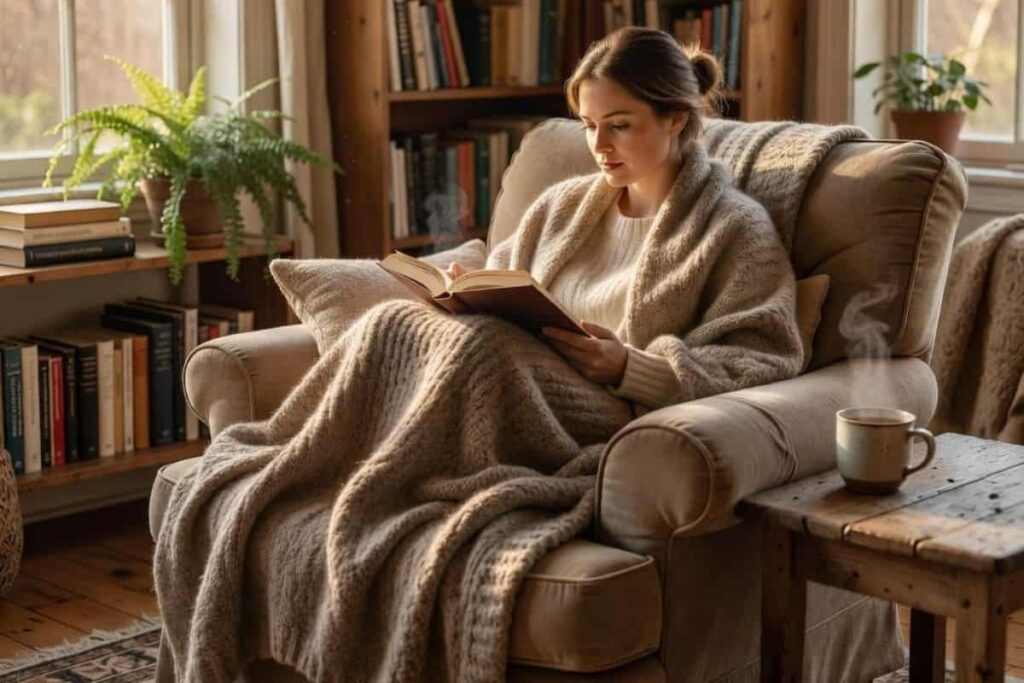
I’ve learned that hobbies don’t have to be productive to be worthwhile. Some of my favorite moments are the quiet ones—reading a few chapters of a good book, coloring while listening to music, or working on a puzzle with a cup of tea nearby. Those simple activities help me step away from the stress of everyday life and focus on something calming instead.
Whether you’re looking for low energy hobbies because you’re feeling exhausted, managing a chronic illness, coping with anxiety, or simply needing a break from a busy schedule, there are plenty of relaxing ways to spend your time. The best hobbies don’t require expensive supplies, hours of free time, or special skills. They simply meet you where you are.
In this guide, you’ll discover a variety of indoor hobbies and practical hobbies to do at home that fit different energy levels. Some will encourage creativity, while others help quiet a busy mind or provide gentle mental stimulation. No matter how you’re feeling today, there’s likely an activity here that can help you relax and recharge.
Table of Contents
Why Hobbies Are Good for Stress Relief
Stress has a way of filling every corner of our minds. When we’re worried, overwhelmed, or juggling too many responsibilities, our thoughts often jump from one concern to the next without giving us a chance to rest.
A hobby creates something different.
It gives your brain a single, enjoyable place to focus.
Instead of replaying yesterday’s conversation or worrying about tomorrow’s schedule, you become absorbed in choosing colors, finding puzzle pieces, turning book pages, or creating something with your hands. Even if it’s only for fifteen or twenty minutes, those moments can help interrupt the constant stream of stressful thoughts.
Hobbies also encourage you to slow your pace.
Unlike work, chores, or deadlines, most hobbies don’t require perfection. There’s no clock to race against and no expectation that everything has to be finished today. You can stop whenever your energy runs out and return another time.
This is especially important if you live with chronic pain, fatigue, fibromyalgia, kidney disease, anxiety, or another condition that affects your energy. Some days you may feel motivated to tackle a larger creative project. Other days, reading a few pages or coloring for ten minutes may be exactly what your body needs.
Both are valuable.
The purpose isn’t to accomplish more.
The purpose is to feel a little better than you did before you started.
Choose a Hobby That Matches Your Energy
One of the biggest mistakes people make is choosing activities based on how they wish they felt instead of how they actually feel.
Before starting anything, pause for a moment and ask yourself a few simple questions.
- How much physical energy do I have?
- How mentally focused do I feel?
- Do I want quiet or gentle stimulation?
- Am I looking for creativity or comfort?
Your answers can help you choose an activity that’s enjoyable instead of frustrating.
For example, if your body feels tired but your mind is alert, you might enjoy reading, solving puzzles, organizing photos, or learning something new.
If your mind feels overwhelmed but your hands want something to do, repetitive activities like knitting, crocheting, coloring, or diamond painting may feel more relaxing.
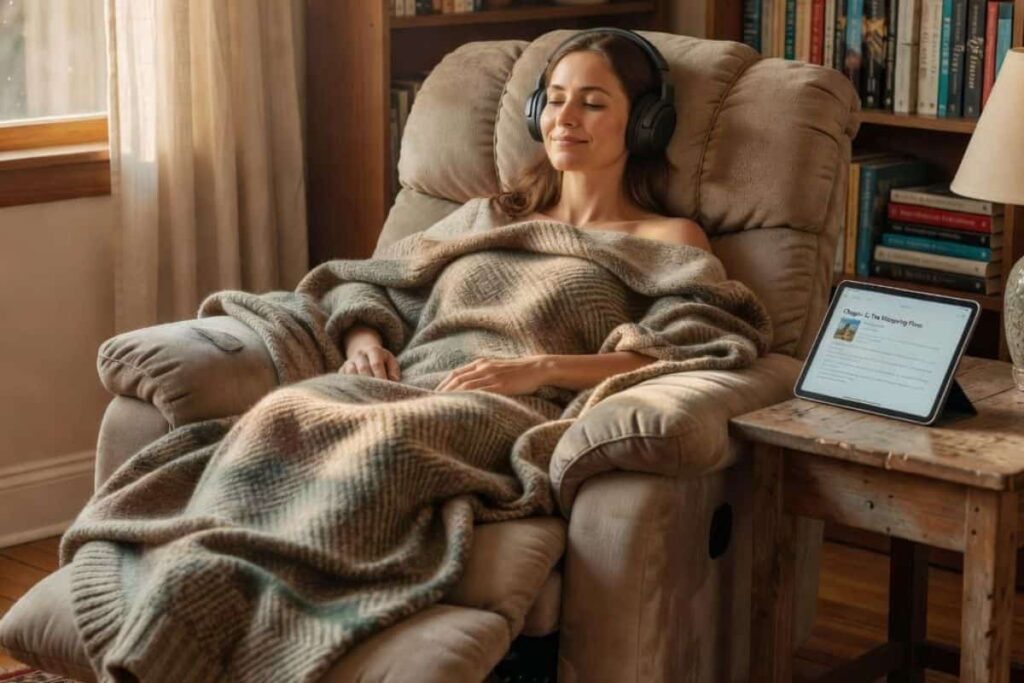
And if both your body and mind are exhausted, simply listening to an audiobook while resting under a cozy blanket may be the perfect choice.
Remember, your energy isn’t the same every day.
That’s why it helps to build a collection of low energy hobbies that you can choose from depending on how you’re feeling.
Quiet Hobbies That Help You Slow Down
When your body is asking for rest, quiet hobbies can be exactly what you need. These activities don’t require a lot of movement or preparation, making them perfect for relaxing afternoons or peaceful evenings.
Read a Book That Helps You Escape
Reading is one of the easiest hobbies for stress relief because it allows you to step into another world for a little while. Whether you enjoy mystery novels, historical fiction, romance, biographies, or inspirational books, reading gives your mind something positive to focus on.
Don’t feel pressured to finish a chapter. Read until you feel relaxed, then stop whenever you’re ready.
Listen to Audiobooks or Podcasts
Some days your eyes need a break just as much as your mind does.
Audiobooks and podcasts let you enjoy stories, learn something new, or simply be entertained while resting comfortably on the couch or in bed.
If you’re having a particularly low energy day, this can be one of the easiest ways to unwind without asking much from yourself.
Work on a Puzzle
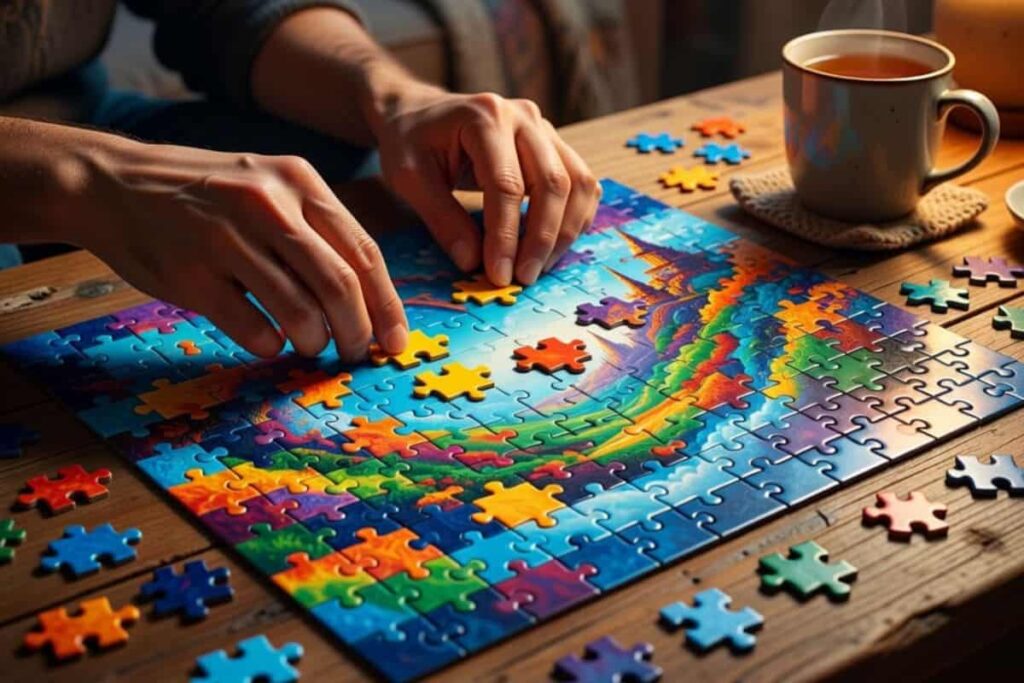
Jigsaw puzzles encourage patience and gentle concentration.
Instead of trying to finish the entire puzzle, focus on one corner, one color, or one small section at a time. Watching the picture slowly come together creates a satisfying sense of progress without feeling rushed.
Complete Word Games
Crossword puzzles, Sudoku, word searches, and logic puzzles provide enough mental stimulation to keep boredom away while still feeling relaxing.
They’re easy to pause and return to later, making them excellent indoor hobbies for busy or unpredictable days.
Creative Hobbies That Feel Relaxing
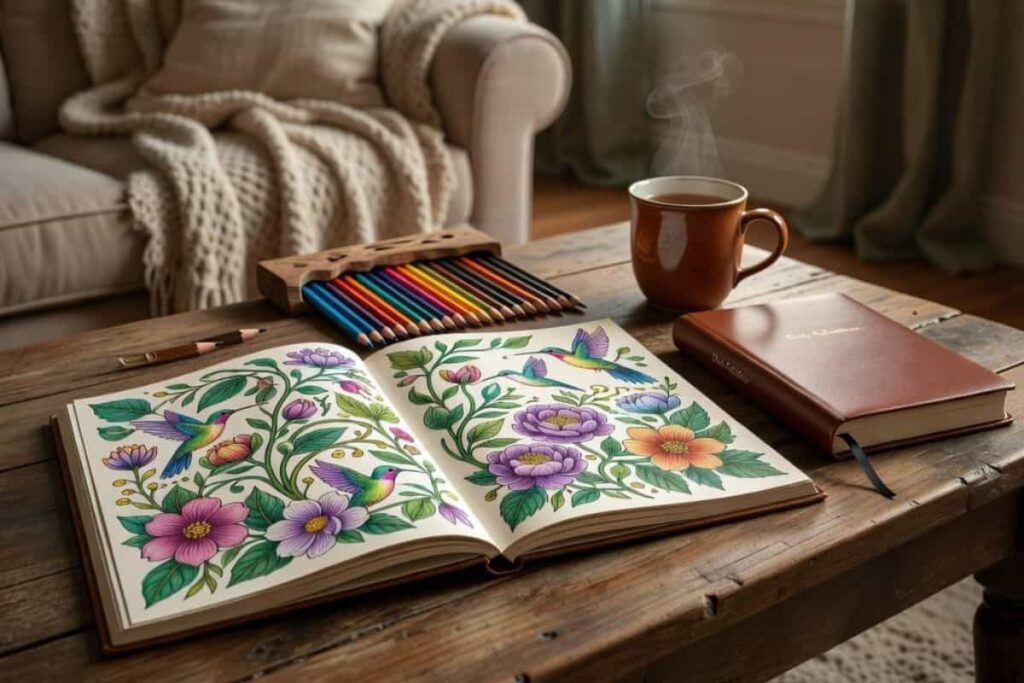
Being creative doesn’t mean you have to paint a masterpiece or spend hours making something elaborate.
Sometimes creativity is simply giving yourself permission to play.
Color Without Worrying About Perfection
Adult coloring books remain popular because they’re simple, calming, and enjoyable.
Choose colors you love.
Color one flower.
Finish half a page.
Or stop after ten minutes.
There’s no wrong way to enjoy it.
Keep a Simple Journal
Journaling doesn’t have to involve writing pages about your life.
Try writing:
- Three things you’re grateful for.
- A favorite memory.
- A quote that inspires you.
- One thing you’re looking forward to.
- How you’re feeling today.
Sometimes putting your thoughts on paper is enough to help clear your mind.
Try Knitting or Crochet
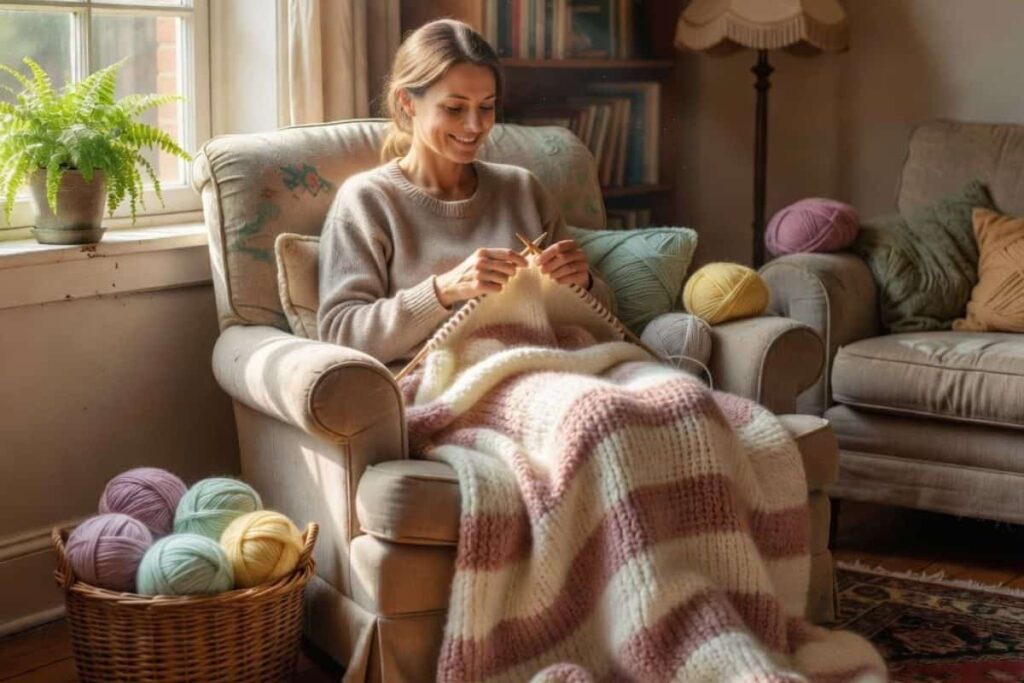
The repetitive motion of knitting or crocheting can feel incredibly soothing.
Start with a beginner-friendly project like a dishcloth, scarf, or simple blanket square.
Don’t worry about making mistakes.
Every stitch is part of the learning process.
Hobbies That Keep Your Mind Engaged
Sometimes your body feels tired, but your mind still wants something to do. Instead of scrolling through social media or watching television for hours, try an activity that gently challenges your brain without becoming overwhelming.
These hobbies for stress relief can help you stay mentally engaged while still allowing your body to rest.
Learn Something New Online
Learning doesn’t have to mean taking a long class or earning a certificate. There are countless free resources that let you explore a topic simply because it interests you.
You might learn:
- A few words in a new language
- Basic photography tips
- Bird identification
- Gardening techniques
- Simple watercolor painting
- Family history research
- Beginner calligraphy
Keep your expectations realistic. Spend fifteen or twenty minutes exploring a topic, then come back another day if you want to continue.
Organize Digital Photos
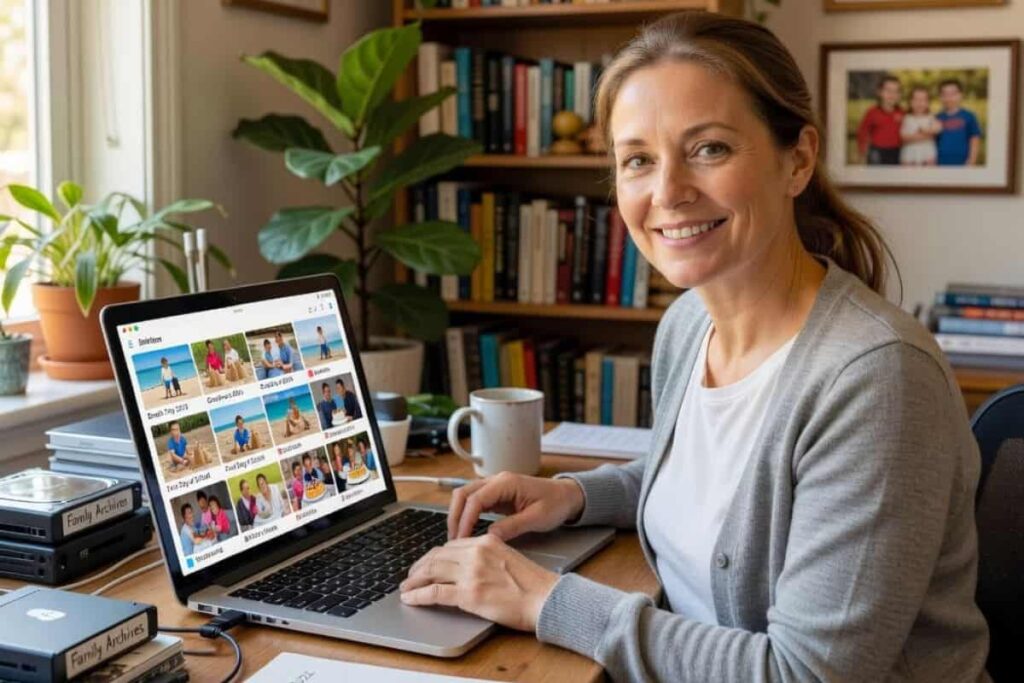
Most of us have hundreds—or even thousands—of photos stored on our phones and computers.
Choose one folder or one month of pictures and spend a little time deleting duplicates, organizing albums, or creating a collection of your favorite memories.
Looking back through happy moments can be surprisingly comforting and often reminds you of experiences you may have forgotten.
Create a Reading List
If you’re someone who enjoys books, spend a quiet afternoon making a list of titles you’d like to read this year.
Browse your local library’s website, check recommendations from friends, or revisit favorite authors.
Planning future reading gives you something enjoyable to look forward to while keeping your mind engaged.
If you love keeping track of the books you read, consider using a reading journal. Writing down your favorite quotes, memorable characters, and personal reflections can make each book even more meaningful. I created my Cozy Reading Journal Printable to help readers organize their book lists, record their thoughts, and remember the stories they love long after they’ve finished the last page.

Free Hobbies to Do at Home
Relaxing hobbies don’t have to cost a lot of money. In fact, some of the best hobbies to do at home require little more than items you probably already have.
If you’re trying to reduce stress without spending extra money, consider these ideas.
Write Letters or Cards
Handwritten notes have become rare, which makes them even more meaningful.
Write a letter to a family member, send a thank-you card, or simply let a friend know you’re thinking about them.
Acts of kindness often brighten your own day as much as someone else’s.
Rearrange a Bookshelf
Sometimes changing your surroundings—even in a small way—can make your home feel fresh again.
Organize your books by color, genre, author, or simply display a few favorites where you’ll see them more often.
It’s a simple project that feels satisfying without requiring much energy.
Watch Birds From Your Window
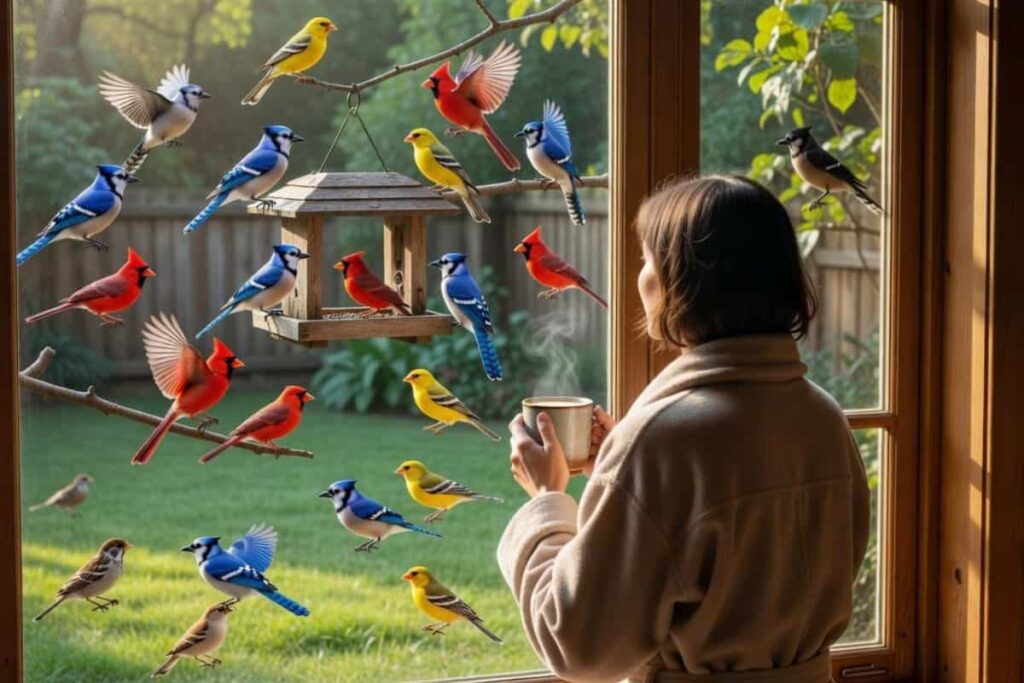
You don’t have to hike through a nature preserve to enjoy wildlife.
Sit near a window with a cup of coffee or tea and simply watch the birds that visit your yard or neighborhood.
Keep a notebook nearby and write down the different species you notice.
You’ll probably be surprised by how many visitors stop by each day.
Make a Gratitude List
When stress feels overwhelming, it’s easy to focus on everything that’s going wrong.
A gratitude list gently shifts your attention toward the good that’s still present.
It doesn’t have to be life-changing.
Maybe you’re thankful for:
- A sunny afternoon
- Your favorite blanket
- A phone call from a friend
- A good cup of coffee
- Finishing a book
- Your pet curled up beside you
Small moments matter.
Cozy Hobbies for Relaxing Evenings
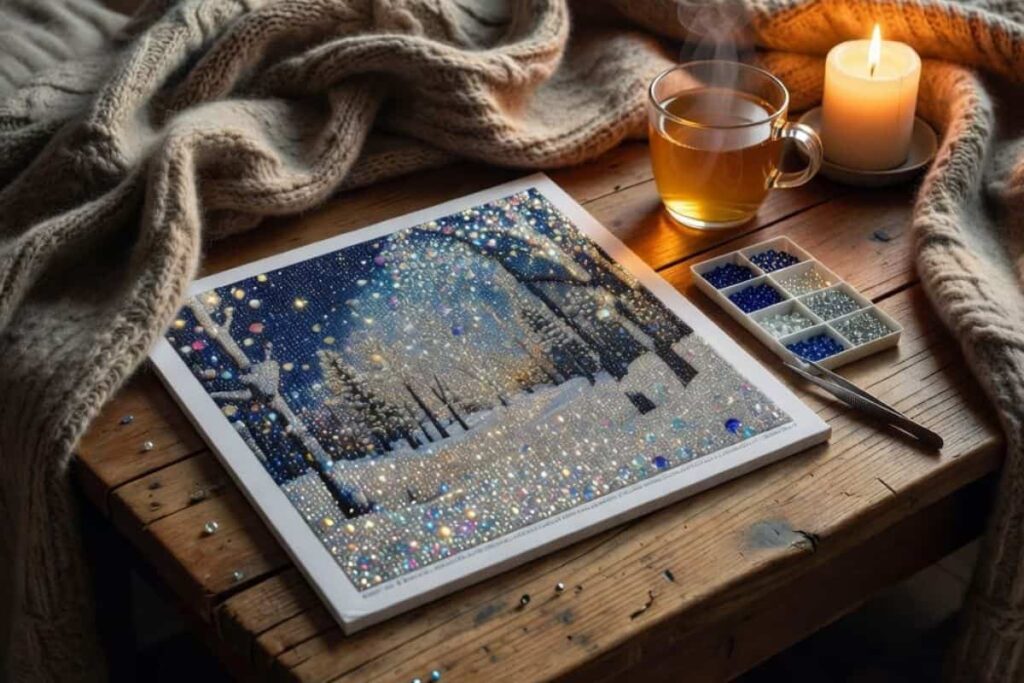
Evenings are often the perfect time to slow down after a busy day. Instead of feeling like you need to stay productive, create a relaxing routine that helps your body recognize it’s time to unwind.
Complete a Small Craft Project
Not every craft has to become a major project.
Try something simple like:
- Decorating a bookmark
- Making greeting cards
- Pressing flowers
- Creating a small scrapbook page
- Painting a wooden ornament
- Decorating a notebook cover
Choose projects that can be finished in one sitting if possible. Smaller projects often feel less overwhelming and provide a satisfying sense of accomplishment.
Try Diamond Painting
Diamond painting has become one of the most popular indoor hobbies because it’s both creative and repetitive.
Working one small section at a time allows you to focus on simple, repetitive movements while watching the picture slowly come together.
Many people find it incredibly calming after a stressful day.
Listen to Music With Your Full Attention
Instead of turning on background music while doing something else, make listening the activity.
Create a playlist of songs that help you feel peaceful.
Close your eyes.
Take slow breaths.
Notice the instruments, lyrics, and emotions each song brings.
Sometimes slowing down is exactly what your mind needs.
Hobbies You Can Enjoy From Bed or a Recliner
There are days when leaving the couch—or even getting out of bed—just isn’t realistic.
That doesn’t mean you have to give up your hobbies.
Many low energy hobbies can be enjoyed from wherever you’re most comfortable.
Some of my favorites include:
- Reading on a Kindle or tablet
- Listening to audiobooks
- Adult coloring books
- Word search books
- Sudoku
- Knitting
- Crochet
- Cross-stitch
- Browsing cookbooks for future meal ideas
- Watching educational documentaries
- Digital puzzles on a tablet
- Journaling
- Planning future vacations
- Making Pinterest inspiration boards
A lap desk can also make writing, drawing, or using a tablet much more comfortable while supporting your arms and shoulders.
The goal isn’t to push yourself.
The goal is to make relaxing as easy as possible.
Create a Low-Energy Hobby Basket
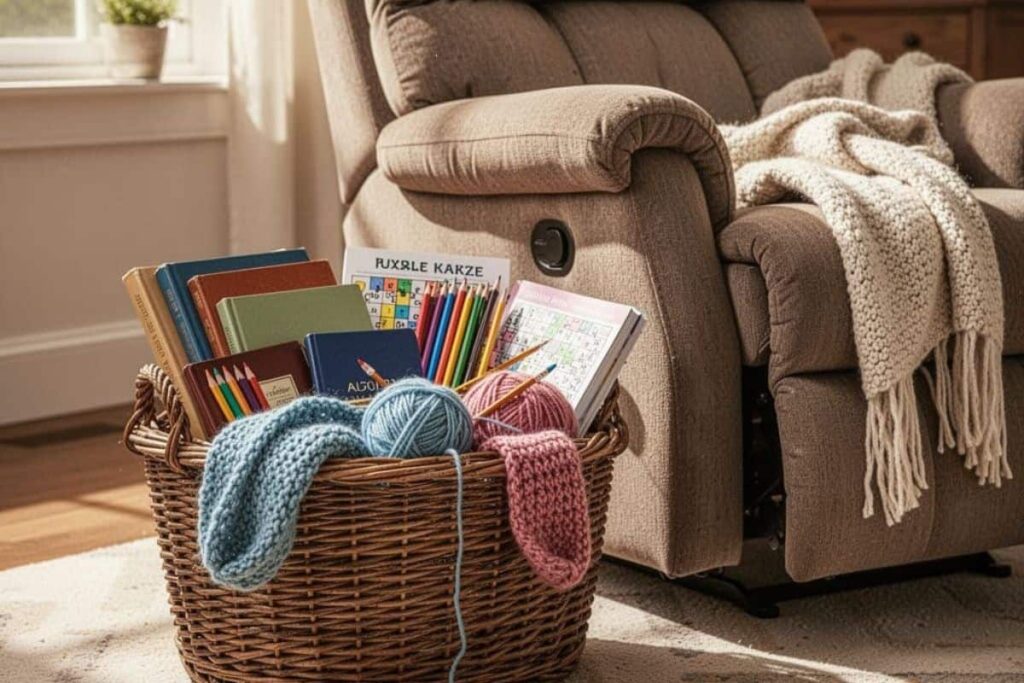
One of the best ideas I’ve added to my own routine is keeping everything I need in one place.
When you’re tired, even searching for supplies can feel like too much work.
A hobby basket removes that barrier.
Choose a small basket, tote, or storage bin and fill it with activities you enjoy.
You might include:
- A favorite paperback book
- Crossword or Sudoku books
- Colored pencils or markers
- An adult coloring book
- A journal
- Pens
- Knitting or crochet supplies
- A small puzzle
- Reading glasses
- Lip balm
- Hand lotion
- A bookmark
- A cozy blanket
Keep the basket near your favorite chair, recliner, or bedside so it’s always within reach.
When everything is ready to go, it’s much easier to choose one of your favorite hobbies for stress relief instead of automatically reaching for your phone.
Remember, Your Hobby Doesn’t Have to Be Productive
One of the biggest lessons I’ve learned is that hobbies don’t need to earn money, produce something beautiful, or impress anyone else.
They simply need to bring you joy.
Some days you’ll finish a puzzle.
Other days you’ll color one page.
Sometimes you’ll only read a few chapters before taking a nap.
Every one of those moments counts.
Rest is productive, too.
Know When It’s Time to Take a Break
One of the wonderful things about hobbies is that they’re meant to reduce stress—not create more of it.
If you notice yourself becoming frustrated, tired, or distracted, it’s perfectly okay to stop. You don’t have to finish the puzzle, complete the crochet project, or color the entire page in one sitting.
In fact, leaving something unfinished gives you a reason to come back later.
Pay attention to how your body feels.
If your shoulders are getting tense, your eyes are tired, or your concentration is fading, take a break. Stretch, grab a drink of water, or simply rest for a while.
Your hobby will still be there when you’re ready.
The goal isn’t to accomplish more.
The goal is to enjoy the time you spend doing it.
Build a Hobby Routine That Works for You
Many people think they need to schedule hours every week to enjoy a hobby, but that’s rarely necessary.
Instead, look for small pockets of time throughout your day.
You might:
- Read for 15 minutes before bed.
- Color while listening to your favorite playlist.
- Work on a puzzle after dinner.
- Knit while watching television.
- Spend a few quiet minutes journaling with your morning coffee.
- Listen to an audiobook while resting in your favorite chair.
These little moments add up over time.
The more consistently you make space for activities you enjoy, the more naturally they become part of your routine.
Remember, your hobby doesn’t have to happen every day.
Even once or twice a week can give you something to look forward to and help you recharge.
Frequently Asked Questions
What are the best hobbies for stress relief?
The best hobbies for stress relief are the ones that help you relax without adding pressure. Reading, coloring, knitting, crocheting, journaling, puzzles, birdwatching, listening to audiobooks, and gardening are all popular choices because they encourage you to slow down and focus on something enjoyable.
What are good low energy hobbies?
Some of the best low energy hobbies include reading, listening to podcasts, adult coloring books, journaling, crossword puzzles, knitting, crochet, diamond painting, organizing photos, and watching birds from a window. These activities can usually be enjoyed while sitting comfortably, making them great options when you’re feeling tired.
What hobbies can I do at home?
There are countless hobbies to do at home, including baking, cooking, drawing, photography, scrapbooking, puzzles, crafting, watercolor painting, reading, writing, learning a new language, genealogy research, and many more. The best hobby is one that fits both your interests and your current energy level.
Can hobbies improve mental well-being?
While hobbies aren’t a replacement for professional medical or mental health care, many people find that engaging in enjoyable activities helps them relax, reduces feelings of stress, and provides a healthy way to unwind. Spending time on activities you genuinely enjoy can also create a sense of accomplishment and give your mind a welcome break from everyday worries.
How do I choose the right hobby?
Start by thinking about what sounds enjoyable rather than what seems productive. If you’re feeling physically tired, choose activities that require little movement. If your mind feels busy, repetitive hobbies like knitting, coloring, or puzzles may help you relax. Don’t be afraid to try several activities until you discover the ones you enjoy most.

Final Thoughts on Finding Hobbies for Stress Relief
Life isn’t always busy because we’re doing too much. Sometimes it’s busy because our minds never seem to get a chance to slow down.
That’s why hobbies matter.
They give us permission to step away from responsibilities, quiet the mental noise, and spend time doing something simply because it brings us joy.
The best hobbies for stress relief aren’t necessarily the most creative or impressive ones. They’re the activities that leave you feeling calmer than when you started.
Some days that might mean finishing a chapter in a good book.
Other days it could be working on a puzzle, coloring for a few minutes, or listening to an audiobook while resting under a cozy blanket.
There isn’t a right or wrong way to enjoy a hobby.
What’s important is finding activities that fit your lifestyle, respect your energy, and give you something to look forward to—even on the most stressful days.
Start small.
Choose one idea from this list and give yourself permission to enjoy it without worrying about being productive.
You might be surprised how much of a difference those quiet moments can make.
Your Next Step
If writing helps you clear your mind and process your thoughts, keeping a journal can be a wonderful hobby to add to your routine. If you’re not sure where to begin, check out my guide on How to Start Journaling for simple tips to help you get started.
If you’d like a dedicated place to reflect, set goals, and write down your thoughts, take a look at my Reflection Journal Printable. It’s designed to give you plenty of space to write while keeping everything organized in one place.
Follow Me On Social Media:

Hi, I’m Gina — the creator behind Chronically Gina and Gina’s Printable Shop.
I create practical printables, wellness tools, and encouraging content to help make everyday life feel more manageable. Living with chronic illness has inspired me to share realistic routines, organization tips, meal planning ideas, and supportive resources for busy women, families, caregivers, and teachers.
My goal is to help you feel less overwhelmed and more supported with simple systems that work for real life — not perfection.


