
Chronic Illness Flare: Your Survival Kit Checklist
This post may contain editorial samples and/or affiliate links. We earn a commission on your sales.

A chronic illness flare can turn an ordinary day into a difficult one without much warning. One minute, you might be feeling well enough to tackle your usual routine, and the next, your body is telling you that everything needs to stop.
If you live with chronic illness, you probably know how frustrating this can be. You make plans, look forward to doing something, or simply want to get through your daily responsibilities. Then your symptoms decide otherwise.
I live with several chronic health conditions, and I’ve learned that having a few things prepared ahead of time can make a difference. It doesn’t take away the pain or magically make me feel better, but it does mean I have fewer things to worry about when I’m already struggling.
That’s where a flare day survival kit comes in.
Having your comfort items, medications, snacks, and other necessities within reach can make those difficult days a little easier. You don’t need anything fancy or expensive, either. Many of the things you need are probably already in your home.
Let’s talk about what to include in your survival kit and how to put one together that works for your needs.
Table of Contents
What Is a Chronic Illness Flare?
A chronic illness flare happens when symptoms of an ongoing health condition become worse than usual. Depending on your condition, a flare might last a few hours, several days, or even longer.
For some people, a flare means increased pain and fatigue. Others may experience brain fog, digestive problems, headaches, dizziness, or difficulty sleeping.
Sometimes, you can recognize what triggered your symptoms. Maybe you pushed yourself too hard, didn’t sleep well, or experienced more stress than usual.
Other times, there doesn’t seem to be an obvious reason.
That’s one of the frustrating things about living with chronic illness. You can do everything you normally do to take care of yourself and still have a bad day.
I’ve learned that fighting against what my body is telling me usually doesn’t help. There are days when I have to change my plans, rest more than I expected, and accept that certain things will have to wait.
Having a chronic illness flare up doesn’t mean you’ve done something wrong. Symptoms can fluctuate even when you’re following your usual care routine.
One important thing to remember is that not every new or worsening symptom should automatically be considered a flare. If something feels different from your usual symptoms, is severe, or concerns you, contact your healthcare provider.
Why You Should Prepare a Flare Day Survival Kit
Think about the last time you had a really difficult health day.
Did you have everything you needed nearby? Or did you find yourself getting up repeatedly to grab water, find your medication, or look for something that would make you more comfortable?
When you’re already dealing with pain or exhaustion, those extra trips can feel like a lot.
A chronic illness flare survival kit helps you prepare for those moments before they happen.
The goal isn’t to fill a basket with dozens of products. It’s to keep the things you regularly need together in one convenient place.
Your kit can help you:
- Keep frequently used items within easy reach.
- Avoid unnecessary trips around the house.
- Make resting a little more comfortable.
- Reduce the number of decisions you need to make.
- Feel more prepared when symptoms become worse.
I think the biggest benefit is simply having one less thing to worry about.
When I’m having a difficult pain day, I don’t want to spend my limited energy searching for something I need.
And your kit doesn’t have to look like anyone else’s. What helps someone with migraines may be completely different from what someone with fibromyalgia, arthritis, or another chronic condition needs.
The best survival kit is the one that works for you.
10 Essential Items for Your Chronic Illness Flare Day Survival Kit
These are ten categories of items worth considering when putting together your flare day essentials. You don’t have to include everything, and you certainly don’t need to purchase everything at once.
Start with what you already own and add items as you discover what helps you most.
1. Medications and Medical Essentials
One of the first things to consider is how you’ll access your medications and medical supplies during a flare.
Depending on your healthcare needs, this might include prescribed medications, doctor-approved over-the-counter products, or other supplies you use regularly.
You might want to keep a small medication list in your kit, including dosages, instructions, allergies, and important contact numbers.
If you use a pill organizer, having it prepared ahead of time may make your routine easier.
A few things to consider:
- Your current medication list
- Prescribed as-needed medications
- A pill organizer, if appropriate
- Medical supplies specific to your condition
- Your healthcare provider’s contact information
Always follow your prescribed medication instructions and storage requirements. Some medications should not be transferred into another container or stored in certain conditions.
2. A Refillable Water Bottle
Staying hydrated is important, but getting up repeatedly to refill a glass isn’t always easy when you’re not feeling well.
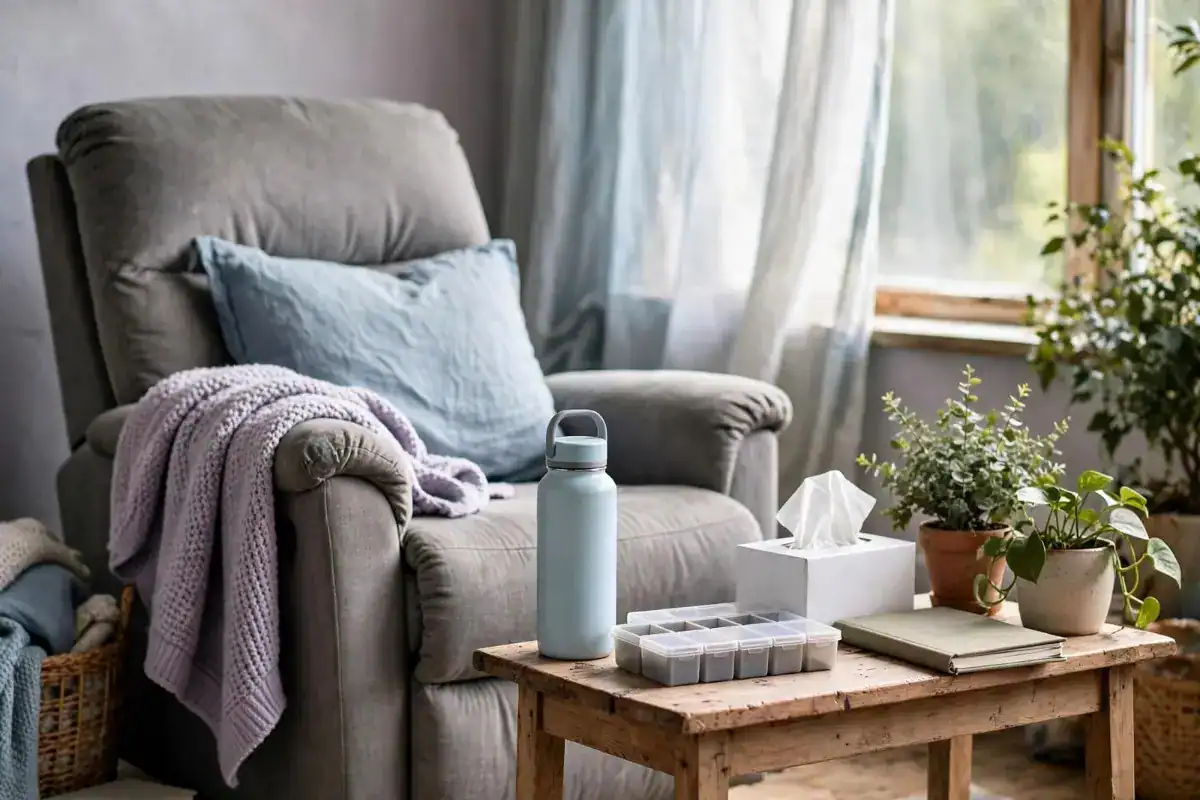
A water bottle with a secure lid can be especially helpful if you spend much of your flare day in bed or resting in a recliner.
I would look for something that’s easy to open, comfortable to hold, and unlikely to spill.
If lifting a heavy bottle is difficult, choose a smaller one that you can manage comfortably.
You might also prefer a bottle with a straw so you don’t have to sit up as much to take a drink.
Of course, if your healthcare provider has recommended limiting fluids or following specific hydration guidelines, those instructions should come first.
3. Easy Snacks and Simple Meals
Cooking is often one of the last things I want to think about when I’m having a bad pain day.
That’s why having a few easy food options available can be so helpful.
You don’t necessarily need to keep food inside your actual survival kit. You could have a small basket of shelf-stable snacks nearby and a few simple meals ready in the kitchen.
Some ideas include:
- Crackers or other easy-to-eat snacks
- Applesauce cups
- Individually packaged snacks
- Simple freezer meals
- Soup or other easy-to-prepare foods
Choose foods that work with your dietary needs and any medical restrictions.
If you have enough energy on a better day, preparing an extra serving of dinner to freeze can also make a future flare day easier.
And remember, a simple meal is still a meal. You don’t need to cook something elaborate when you’re not feeling well.
4. Comfortable Blankets and Pillows
Comfort matters when you’re dealing with increased pain, fatigue, or other symptoms.
A soft blanket, supportive pillow, or small cushion can make your resting area more comfortable.
Because I deal with chronic back pain, finding a comfortable position can be challenging. Sometimes even small adjustments make a difference.
Consider keeping an extra pillow nearby so you can change your position without searching around the house.
You might also want a lightweight blanket that you can easily remove if you become too warm.
The important thing is to choose items that make resting easier for your particular body.
5. Hot and Cold Comfort Items
Some people find that heat or cold helps ease certain types of discomfort during a chronic illness flare.
Depending on your condition and your healthcare provider’s recommendations, you might consider having a heating pad, reusable cold pack, or another approved comfort item available.
For example, some people prefer warmth for muscle stiffness, while others find a cold pack more comfortable for certain painful areas.
However, heat and cold aren’t appropriate for every condition.
Always follow the safety instructions for these products, protect your skin, and avoid falling asleep while using an electric heating pad. If you have reduced sensation, circulation problems, or another condition that affects temperature sensitivity, ask your healthcare provider before using them.
The goal is comfort, not making your symptoms worse.

6. Entertainment for Low-Energy Days
One thing people don’t always talk about is how boring flare days can become.
You might not feel well enough to do much, but that doesn’t necessarily mean you want to spend the entire day staring at the ceiling.
Having a few low-energy activities available can help pass the time.
Some ideas include:
- Audiobooks or podcasts
- A favorite television show
- An e-reader or book
- Simple coloring pages
- Relaxing music
- Easy games on your phone
I like the idea of having different options depending on how I’m feeling.
On some days, reading might be too much. Listening to an audiobook or watching a familiar show may be easier.
And on other days, you may not feel like doing anything at all.
That’s okay, too. Resting doesn’t have to be entertaining or productive.
7. Personal Care Essentials
Basic personal care can feel surprisingly difficult when you’re experiencing increased symptoms.
Keeping a few everyday items within reach can help you feel more comfortable without needing to get up as often.
Consider adding:
- Lip balm
- Tissues
- Hand lotion
- Hair ties
- Hand sanitizer
- A small pack of wipes
These aren’t necessarily exciting items, but they’re the kinds of things you may appreciate having nearby.
You could keep everything together in a small pouch so it doesn’t get scattered around your resting area.
8. Phone Charger and Important Contacts
Your phone can be especially important during a chronic illness flare.
It allows you to contact family, reach your healthcare provider, order groceries, or ask someone for help if needed.
Keeping a long charging cable near your bed or favorite resting spot can make things much easier.
You may also want a small power bank, especially if reaching an outlet is difficult.
Consider keeping a written list of important phone numbers in your kit as well.
That way, you have access to them if your phone isn’t working or the battery runs out.
If you live alone, it may also help to arrange a simple check-in plan with someone you trust for especially difficult days.
9. A Symptom Tracker or Small Notebook
When you’re dealing with multiple symptoms, remembering exactly when something started or how long it lasted isn’t always easy.
A simple symptom tracker can help you record information you may want to discuss with your healthcare provider.
You could write down:
- When your symptoms started
- Which symptoms became worse
- Your pain or fatigue levels
- Possible triggers
- Medications taken as directed
- Anything that seemed to help
You don’t need to write a detailed journal entry every time you have a bad day.
A few quick notes are enough.
I also think it’s important to keep tracking simple. When you’re exhausted or dealing with brain fog, filling out a complicated worksheet may be the last thing you want to do.
If you’re looking for an easy way to get started, you can also check out my Chronic Pain Tracker Printable.
10. Something That Brings You Comfort
Not everything in your survival kit has to serve a medical or practical purpose.
Sometimes, it’s the little things that make a difficult day feel more manageable.
Maybe it’s your favorite cozy socks, a soft blanket, a comforting book, or a small item that makes you smile.
You could even include a handwritten reminder that it’s okay to rest.
Living with chronic illness can be emotionally exhausting, especially when symptoms interfere with things you wanted or needed to do.
Having something familiar and comforting nearby won’t make the flare disappear, but it may help make the day feel a little less overwhelming.
Choose something that genuinely makes you feel better, not something you think you’re supposed to enjoy.
How to Organize Your Flare Day Survival Kit
Now that you have some ideas for what to include, let’s talk about keeping everything organized.
The good news is that you don’t need an expensive organizer.
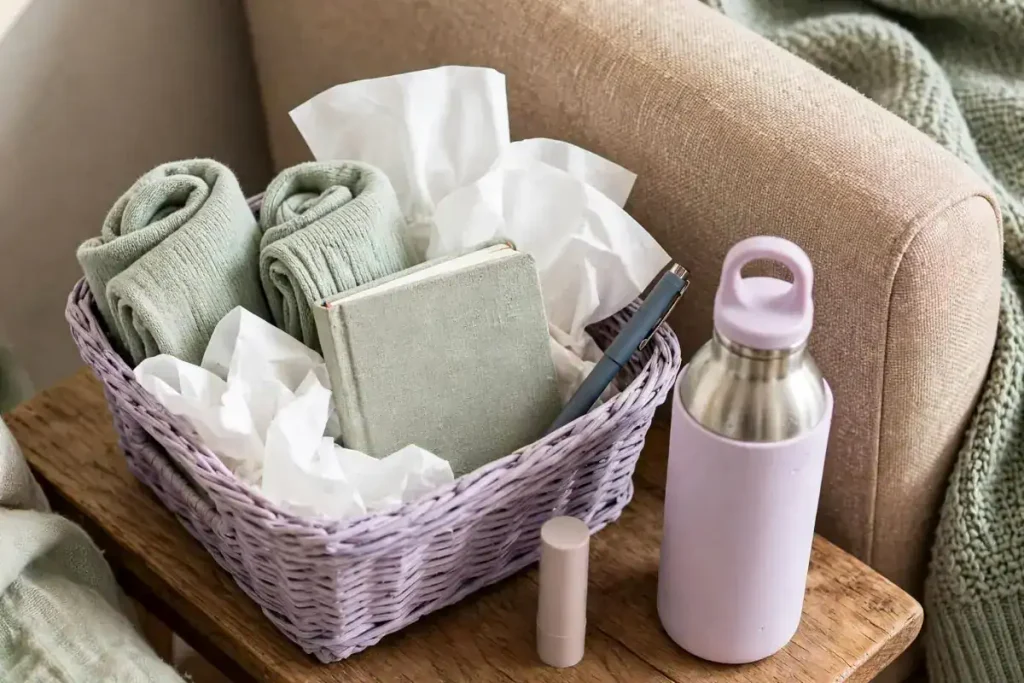
A small basket, storage bin, bedside caddy, or drawer can work perfectly well.
I would start by thinking about where you spend most of your time during a flare.
If you usually rest in bed, a bedside organizer might be the best option. If you spend most of your day in a recliner, a basket or small table nearby may work better.
Keep frequently used items where you can reach them without stretching, bending, or getting up unnecessarily.
You may also want to divide your supplies into two groups.
Everyday essentials: Items you use regularly, such as your phone charger, water bottle, tissues, and lip balm.
Flare-specific essentials: Things you reach for when symptoms become worse, such as approved comfort supplies, symptom tracking pages, or extra pillows.
This makes it easier to find what you need without digging through everything.
Prepare Your Kit Before Your Next Flare
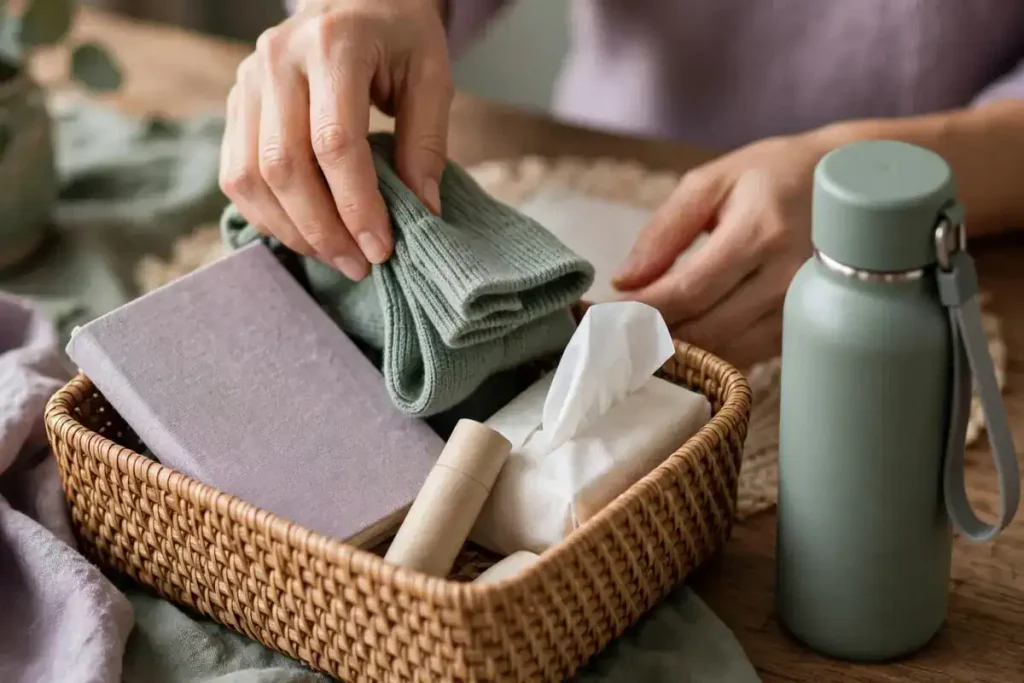
The best time to put together your survival kit is when you’re feeling well enough to do it.
I know that better days often come with a long list of things we want to accomplish. Organizing a basket of supplies might not seem like a priority.
But even spending ten minutes gathering a few essentials can help you prepare for a future chronic illness flare.
You don’t have to complete the entire kit in one afternoon.
Start with your medications and medical information, then add your comfort items and other necessities when you have the energy.
It’s also worth checking your supplies occasionally.
Replace expired items, charge your power bank, and make sure everything is still where you expect it to be.
A little preparation on a better day can save you unnecessary effort on a difficult one.
What to Do When a Chronic Illness Flare Hits
Even with a well-stocked survival kit, flare days can still be frustrating.
You might have plans that need to change, work that has to wait, or household tasks that aren’t going to get done.
I’ve had to learn that some days simply aren’t going to look the way I expected.
When symptoms become worse, try to focus on what actually needs your attention.
Ask yourself whether something truly needs to be done today or whether it can wait.
Maybe dinner needs to be something simple. Maybe the laundry stays in the basket another day. Maybe you need to cancel plans and spend more time resting.
That doesn’t mean you’re giving up on your responsibilities. It means you’re making adjustments based on what your body can manage.
Follow the flare management plan you’ve discussed with your healthcare provider, if you have one. If symptoms are unusual, significantly worse, or not responding as expected, seek medical advice. Severe or potentially life-threatening symptoms require emergency care.
And please remember that you don’t have to earn rest by finishing everything on your to-do list.
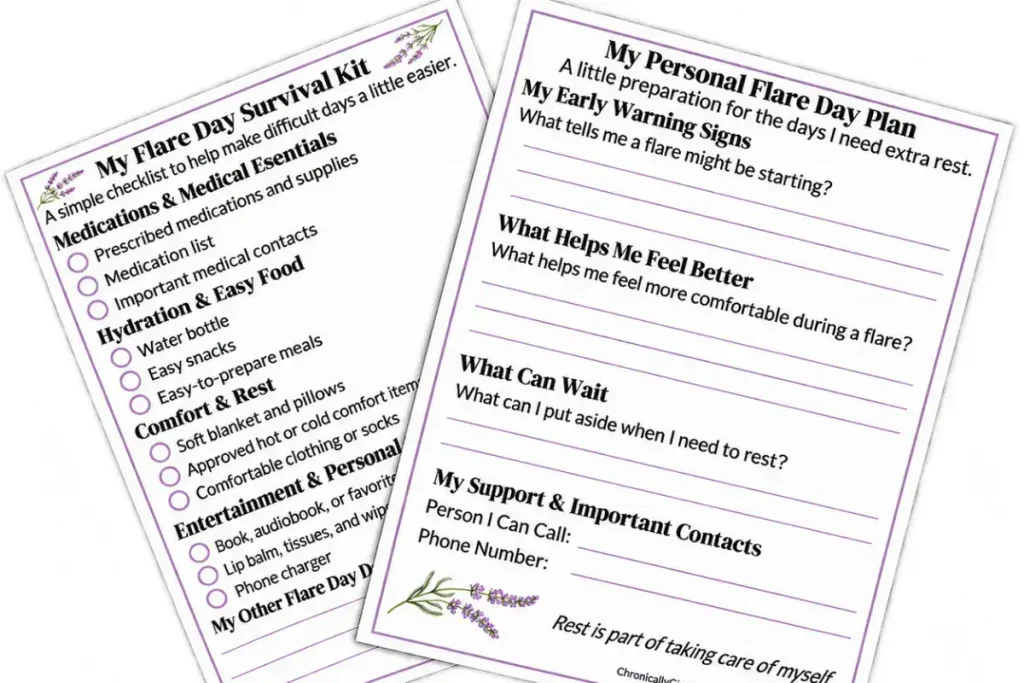
Download Your Free Flare Day Survival Kit Checklist
Putting together a survival kit doesn’t need to be complicated.
To make it easier, I’ve created a printable Flare Day Survival Kit Checklist that you can use to gather your essentials and personalize your kit.
Use it to check off the items you already have, identify anything you’re missing, and add supplies that are specific to your health needs.
Download Your Free Flare Day Survival Kit Checklist
You can keep a copy with your supplies or save it somewhere convenient so you can update it whenever your needs change.
Final Thoughts
Living with chronic illness means learning to adjust, sometimes more often than we’d like.
A chronic illness flare can interrupt your routine, change your plans, and leave you feeling frustrated with everything you can’t do that day.
I wish there were a simple way to prevent every difficult day, but unfortunately, that’s not how chronic illness works.
What we can do is find small ways to make those days a little easier.
Having a survival kit ready won’t eliminate your symptoms, but it can help you stay comfortable, keep important items close, and avoid using energy you don’t have to spare.
Start small. Use what you already own. Make changes as you learn what works best for you.
And on the days when all you can manage is resting and taking care of your basic needs, let that be enough.
I’d love to know: What’s one thing you always want nearby during a flare day? Is there something in your personal survival kit that you couldn’t imagine being without? Share it in the comments. Your suggestion might help someone else prepare for their next difficult day.
Medical disclaimer: This article is for general educational purposes and reflects personal experience. It is not a substitute for individualized medical advice, diagnosis, or treatment. Always follow the guidance of your healthcare professionals.
Follow Me On Social Media:

Hi, I’m Gina — the creator behind Chronically Gina and Gina’s Printable Shop.
I create practical printables, wellness tools, and encouraging content to help make everyday life feel more manageable. Living with chronic illness has inspired me to share realistic routines, organization tips, meal planning ideas, and supportive resources for busy women, families, caregivers, and teachers.
My goal is to help you feel less overwhelmed and more supported with simple systems that work for real life — not perfection.


