Paint by Numbers: A Powerful Hobby for Low-Energy Days
This post may contain editorial samples and/or affiliate links. We earn a commission on your sales.
Some days the idea of “relaxing” feels like its own chore. You want something to do with your hands that isn’t scrolling, but the thought of picking up a blank sketchbook and deciding what to make is genuinely exhausting. Have you ever abandoned a craft project because the deciding part used up whatever energy you had left for the doing part?
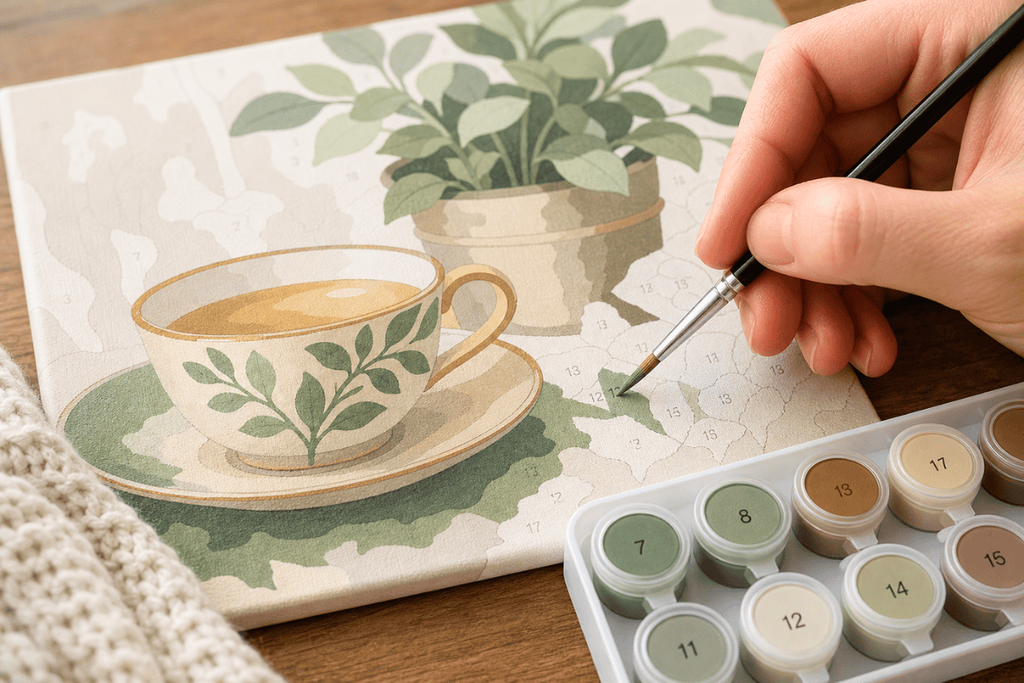
If so, this is for you. Paint by numbers is a painting kit where the canvas already has the design outlined and numbered, and each number corresponds to a specific paint color. It solves a very specific problem: it removes every decision except which color goes where, and even that’s already labeled. For anyone managing chronic pain, fatigue, or anxiety, that’s not a small thing. It’s the difference between a hobby you actually finish and one more unopened kit in a closet.
Table of Contents
Why “Low-Spoons” Hobbies Need a Different Shape
Most hobby advice assumes a baseline of energy and focus that flare days simply don’t offer. A “low-spoons” hobby is one that fits into whatever capacity you have that day, rather than demanding a fixed amount of it. To work on a hard day, it generally needs to:Be resumable in short bursts, not require one long sitting.Not punish you for stopping halfway through.Skip creative decision-making when your brain is already running on fumes.
Reading, puzzles, and coloring books, for example, tend to show up on every low-spoons list for exactly this reason, since none of them punish a reader for closing the book mid-chapter. They’re forgiving. What often gets left off is anything involving actual painting, because painting usually does ask for decisions: what to paint, which colors, how to fix a mistake. That’s the part worth separating out. The physical act of applying color to canvas can be genuinely soothing once the decision-making is taken off the table.
What Makes Paint by Numbers Specifically Different From “Just Painting”
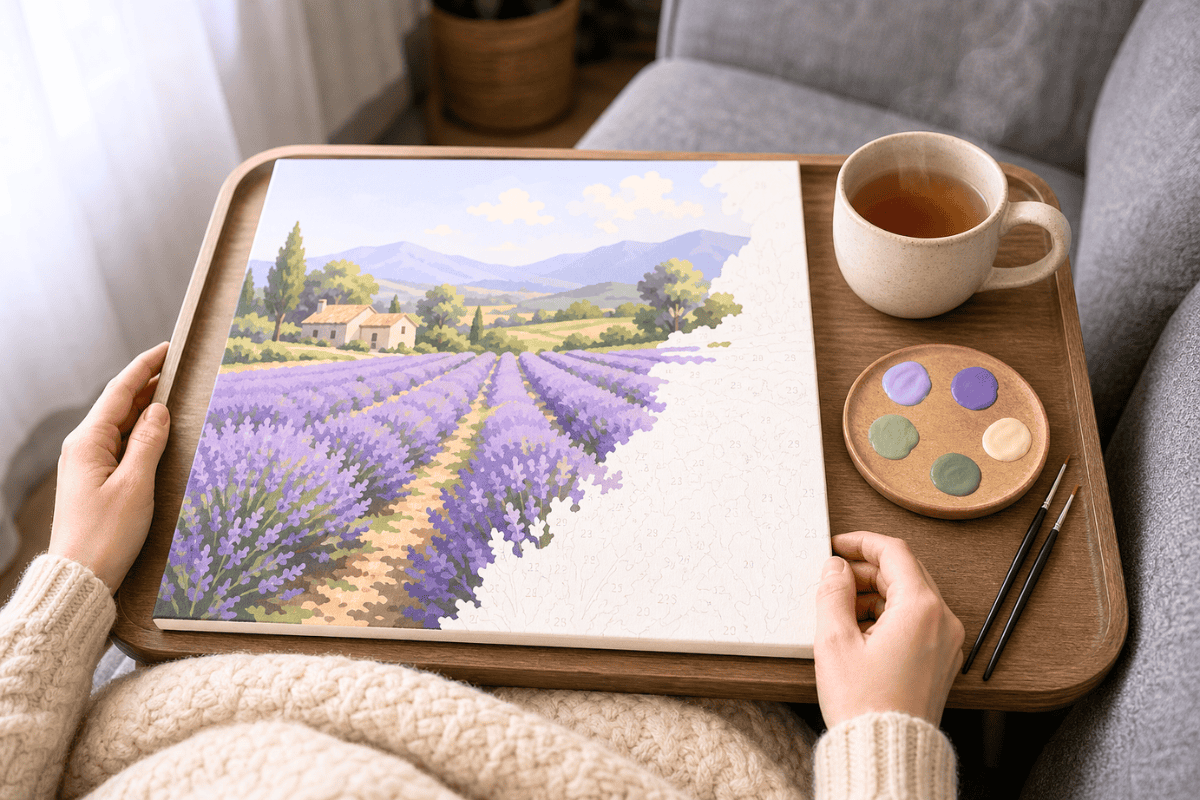
A blank canvas is intimidating even on a good day. A numbered one isn’t, because the composition, the color choices, and the outcome are already decided. You’re not trying to make something good from nothing. You’re filling in a picture that’s already been designed to work, and that single shift removes the perfectionism trap that keeps a lot of would-be hobbies in the closet.
It also scales down naturally. There’s no rule that says you have to finish a section, or a canvas, in one sitting. Ten minutes of filling in one color block on the couch, heating pad on, counts as a full session. You can put the brush down mid-stroke and pick it back up in a week without losing your place. That’s more than can be said for most creative projects, which ask you to remember where your train of thought was.
Davincified’s custom paint by numbers kit takes that a step further by starting from your own photo instead of a stock image. A favorite pet, a grandchild, a place that actually means something, so the finished piece is something you’d want on the wall rather than a generic practice canvas. Every canvas from them uses smart sectioning, larger and clearly numbered regions instead of tiny fiddly ones, which matters more than it sounds like when brain fog or hand tremors make fine detail work frustrating instead of relaxing.
The Sensory Part Isn’t Incidental
There’s a reason repetitive, structured hand tasks show up so often in self-care lists. Filling in small, defined shapes is close to a meditative task, similar to what makes knitting or diamond painting feel calming rather than effortful. The American Art Therapy Association notes that art-making can support emotional regulation and reduce distress. You don’t need a background in art, or a formal practice, to get some of that benefit from twenty quiet minutes with a brush. The point isn’t the finished painting, though that’s a nice bonus. It’s the twenty minutes where your hands are doing something small and satisfying and your mind gets a break from whatever it’s usually doing.
After a few sessions, most people notice they’ve stopped checking the number key for colors they use often and just recognize the shade on sight. That small bit of pattern recognition is part of what makes the activity feel restful instead of like work: your brain settles into a rhythm instead of solving a new problem every few seconds.
Starting Without Overcommitting
The easiest way to kill a new hobby before it starts is to buy too much of it at once, several canvases, a full brush set, more colors than any one project needs. One canvas, in a size you can actually store somewhere visible, is enough to find out whether this is something you’ll return to, since a half-finished kit shoved in a drawer rarely gets finished. Smaller canvases are also easier on hands and wrists that don’t love holding a pose for long, and they give you a finish line that’s realistically in sight instead of weeks away.
Davincified’s paint pots are high-opacity and cover in one coat, so there’s no going back over a section twice to get solid color. That matters when the goal is “put brush to canvas for a bit,” not “achieve gallery-quality blending.” Less physical effort per stroke means more sections finished before your hands or your attention give out.
A Few Adjustments If Hand Pain Is Part of the Picture
If arthritis, Raynaud’s, or general joint pain makes gripping anything for long stretches unpleasant, a few small changes make this a lot more sustainable:
If this sounds like you, Try this:
- Fine detail work leaves your hands aching: Pick a canvas with larger, simpler sections rather than a busy, fiddly one.
- Gripping a thin brush handle for long stretches hurts: Wrap the handle in foam grip tape, or use a slightly thicker brush.
- Sitting hunched over the canvas bothers your neck or back: Prop it on a book or a stand at a comfortable angle instead of flat on your lap.
- You lose your place between sessions: Keep the canvas somewhere visible with brushes already out, not packed away.
None of that turns painting into physical therapy. It just means the hobby doesn’t cost you more than the calm it’s supposed to give back, which is the whole point of picking a low-spoons activity in the first place.
Fitting It Into a Flare Day, Not a Perfect One
The kits that actually get finished are the ones kept somewhere they’re easy to reach without setup. A shallow tray on the coffee table, brushes already out, beats a kit stored in a closet that requires energy just to retrieve. Treat it the same way you’d treat any other low-spoons activity: available for whenever there’s a spare ten minutes, with zero guilt about the weeks it sits untouched in between.
It also helps to let go of the idea that a hobby needs a deadline. There’s no wrong pace for a project that exists to give you something calm to do with your hands. Some sections might get filled in during a good week; others might wait until the next one. Either way, the canvas is still there when you’re ready, exactly where you left it.
A Small Thing That Adds Up
None of this replaces the rest you actually need on a hard day. But what about the in-between moments, the ones where you have a little capacity and want to spend it on something other than a screen? A hobby that removes the guesswork can be worth more than its size suggests. It doesn’t ask you to be creative when you don’t have it in you. It just asks you to fill in the next number.
Follow Me On Social Media:

Hi, I’m Gina — the creator behind Chronically Gina and Gina’s Printable Shop.
I create practical printables, wellness tools, and encouraging content to help make everyday life feel more manageable. Living with chronic illness has inspired me to share realistic routines, organization tips, meal planning ideas, and supportive resources for busy women, families, caregivers, and teachers.
My goal is to help you feel less overwhelmed and more supported with simple systems that work for real life — not perfection.