


Journaling for Mental Health That Truly Helps
This post may contain editorial samples and/or affiliate links. We earn a commission on your sales.

Journaling for mental health can be one of the most powerful and realistic self-care habits you start — especially during stressful, overwhelming, or emotionally exhausting seasons of life. When your mind feels cluttered with anxious thoughts, heavy emotions, endless worries, or mental burnout, writing things down can help create space to process what you’re feeling instead of carrying it all internally. Journaling for mental health creates a safe space where your thoughts and emotions can exist without pressure or judgment.
The truth is, mental health struggles often leave us mentally overloaded. Thoughts race. Emotions pile up. Stress builds quietly in the background until even small things start to feel overwhelming. Journaling gives those thoughts somewhere safe to go.
And the best part? You don’t need to be a “good writer” to benefit from it.
You can write a few sentences.
You can brain dump your thoughts.
You can answer guided prompts.
You can write messy, emotional, imperfect entries.
It all counts.
Journaling isn’t about creating something polished. It’s about giving yourself a safe place to process, reflect, and breathe a little easier.

Table of Contents
Why Journaling for Mental Health Is So Important”
Mental health affects every part of daily life — your energy, focus, sleep, relationships, routines, motivation, and overall well-being. When emotions stay bottled up for too long, they often become heavier and harder to manage.
That’s why journaling can be so helpful.
Writing things down allows you to slow down and actually acknowledge what you’re feeling instead of constantly pushing emotions aside to “keep going.”
Journaling can help you:
- Process difficult emotions
- Reduce mental clutter
- Release stress and anxiety
- Understand emotional triggers
- Reflect on patterns and habits
- Build emotional awareness
- Practice self-compassion
- Create healthier coping routines
Sometimes we don’t fully understand our thoughts until we see them written out in front of us.
There’s something incredibly calming about taking the chaos in your head and placing it onto paper.
The Benefits of Journaling for Mental Health
There are many benefits of journaling for mental health, especially when journaling becomes part of your regular self-care routine. Even writing for five or ten minutes can create noticeable emotional relief over time.

Here are some of the biggest ways journaling can support mental wellness.
One reason journaling for mental health is so effective is because it encourages emotional awareness instead of emotional avoidance.
Helps Reduce Stress and Anxiety
Stress has a way of building up quietly.
You carry worries while working.
You replay conversations.
You overthink situations.
You mentally juggle responsibilities all day long.
Journaling creates a healthy outlet for those thoughts instead of allowing them to continuously spiral in your mind.
Many people find that writing things down helps thoughts feel more manageable and less emotionally overwhelming.
It can also help calm racing thoughts before bed, which may improve sleep and nighttime anxiety.
Many people use journaling for mental health as part of their daily stress management routine.
Encourages Emotional Processing
Life moves fast, and many of us rarely stop long enough to process our emotions properly.
Journaling gives you permission to pause.
Instead of ignoring difficult feelings, you can begin exploring them in a safe, judgment-free space.
You may start noticing:
- What situations emotionally drain you
- What consistently triggers anxiety
- What habits affect your mood
- What situations bring comfort or peace
That emotional awareness is important because understanding your emotions often helps you respond to them more gently.
Journaling for mental health can also help you recognize emotional triggers and unhealthy thought patterns over time.
Supports Mental Clarity
Sometimes your thoughts simply feel “too loud.”
Journaling acts like a mental reset button. It helps organize scattered thoughts and clear some of the emotional clutter that builds up throughout the day.
Even a quick brain dump can leave you feeling mentally lighter afterward.
You don’t always need solutions immediately. Sometimes simply releasing thoughts onto paper helps create breathing room emotionally.
Builds Self-Awareness
One of the most surprising things about journaling is how much it teaches you about yourself.
Over time, journaling may help you recognize:
- Emotional patterns
- Negative self-talk
- Burnout warning signs
- Healthy coping tools
- Positive habits
- Growth and healing progress
You may begin noticing things you hadn’t fully acknowledged before.
And that awareness matters.
Encourages Gratitude and Positive Reflection
Mental health journaling doesn’t always need to focus on difficult emotions.
Some days, journaling can simply be about noticing good moments:
- Something that made you smile
- A small accomplishment
- A comforting routine
- A peaceful moment
- Something you’re grateful for
Those small reflections can help create emotional balance during difficult seasons.
My Favorite Tool for Journaling for Mental Health
If starting a journal feels overwhelming, guided journals can make the process feel much easier and more approachable.
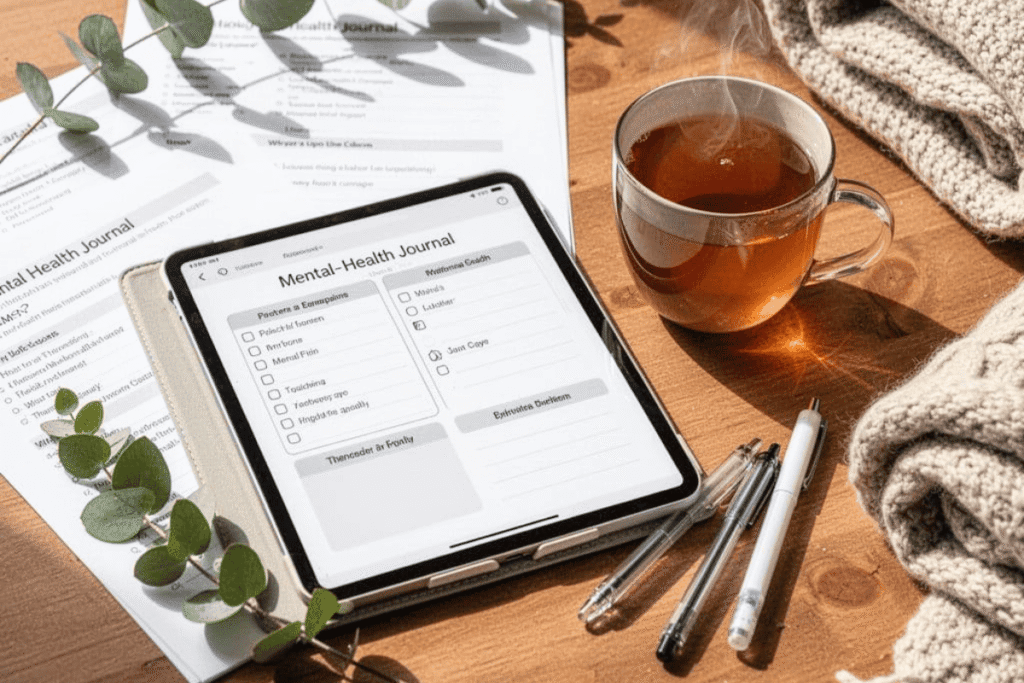
That’s one of the reasons I created my printable Mental Health Journal.
You can find it here:
Mental Health Journal Printable
This journal was designed to support real life — especially during stressful or emotionally overwhelming seasons where your thoughts may feel difficult to organize.
Inside, you’ll find space to:
- Reflect on emotions
- Process stressful days
- Practice gratitude
- Build self-awareness
- Track emotional wellness patterns
- Create supportive self-care habits
- Encourage healthier routines
Sometimes blank pages can feel intimidating. Guided prompts and structured pages can help remove that pressure and make journaling feel easier to maintain consistently.
Simple Ways to Start Journaling for Mental Health
Starting a journal does not need to be complicated.
In fact, simple is usually better.
Here are a few gentle ways to begin.
Start Small
You do not need to write multiple pages every day.
Start with:
- One paragraph
- A few sentences
- A simple emotional check-in
- Five minutes of writing
- One journaling prompt
Small steps are often more sustainable than trying to completely overhaul your routine overnight.
Create a Comfortable Routine
Journaling works best when it feels supportive instead of stressful.
Try attaching it to a calming part of your day:
- Morning coffee
- Quiet evenings
- Before bed
- After therapy
- During rest breaks
- After difficult moments
The goal is consistency — not perfection.
Let Go of Perfect Writing
Your journal does not need:
- Perfect grammar
- Beautiful handwriting
- Organized thoughts
- Polished entries
This space is for honesty, not performance.
Some days your entry may be deep and reflective.
Other days it may simply say:
“Today was hard.”
That still matters.
What Should You Write About?
A lot of people avoid journaling because they don’t know what to write.
But honestly? There are no rules.
You can journal about:
- Anxiety
- Stress
- Chronic illness struggles
- Burnout
- Relationships
- Emotional triggers
- Goals
- Daily life
- Gratitude
- Self-care
- Worries
- Small victories
- Mental exhaustion
Your journal is allowed to hold both the messy and the hopeful parts of life.

Helpful Journaling Prompts for Mental Health
If you feel stuck, journaling prompts can help guide your thoughts and make writing feel easier.
Here are a few simple prompts to try:
- What emotions have I been carrying lately?
- What has been mentally draining me?
- What do I need more of right now?
- What helped me feel calm recently?
- What thoughts keep repeating in my mind?
- What am I proud of myself for today?
- What would I say to a friend feeling this way?
- What small thing can I do for myself tomorrow?
If you’d like more ideas, I also shared a full list of helpful prompts here:
Journaling Prompts for Mental Health
Prompts can be especially helpful during emotionally overwhelming days when your mind feels blank or scattered.
Using prompts for journaling for mental health can make it easier to write during emotionally overwhelming days.

Pair Journaling With Simple Self-Care Habits
Journaling can become even more supportive when paired with gentle self-care routines.
Sometimes mental health support isn’t about making huge life changes. Sometimes it’s about small, manageable habits that help you feel a little more grounded day by day.
That’s why I also created a free Self-Care Checklist to help make self-care feel simpler and more realistic during overwhelming seasons of life.
The checklist includes gentle reminders and supportive ideas to help you:
- Slow down mentally
- Build calming routines
- Prioritize rest
- Support emotional wellness
- Create healthier daily habits
- Remember basic self-care during stressful days
Because honestly? When life feels overwhelming, even remembering the basics can feel difficult sometimes.
This checklist is designed to feel supportive — not stressful.
You can sign up below to grab the free Self-Care Checklist and start building small moments of calm into your daily routine.
Self-Care is very important. Remember self-care is not selfish. Sign up for my newsletter to receive a free Self-Care checklist.
Tips to Make Journaling Easier to Stick With
Like any habit, journaling becomes easier with consistency and patience.
Here are a few ways to make journaling feel more natural.
Keep Your Journal Visible
If your journal stays hidden away, it’s easier to forget about it.
Try keeping it:
- Beside your bed
- On your desk
- Near your favorite chair
- In your bag
- Next to your planner
Little visual reminders can help you stay consistent.
Use Prompts on Hard Days
Not every journaling session needs to be deep or emotional.
Sometimes prompts simply help get thoughts moving when your brain feels mentally tired.
Don’t Pressure Yourself to Journal Daily
You do not need to journal every single day for it to help.
Some weeks you may write often.
Other weeks you may barely journal at all.
That’s okay.
Journaling should support your mental health — not become another stressful task.
Focus on Honesty Instead of Productivity
Your journal is not a productivity tool.
You are allowed to:
- Vent
- Cry
- Celebrate
- Process emotions
- Brain dump thoughts
- Write messy entries
Your journal is simply a safe place for your thoughts to exist honestly.
Journaling as Part of Your Mental Wellness Routine
Journaling works beautifully alongside other calming habits and emotional wellness tools.
You might pair journaling with:
- Reading
- Prayer
- Meditation
- Tea or coffee time
- Stretching
- Deep breathing
- Quiet evenings
- Therapy sessions
Even a few intentional minutes of reflection can help create emotional breathing room during difficult seasons.
A Gentle Reminder About Mental Health Support
While journaling can be an incredibly helpful mental wellness tool, it’s important to remember that it’s not a replacement for professional mental health care when deeper support is needed.
Sometimes healing looks like combining journaling with:
- Therapy
- Counseling
- Medication
- Medical care
- Support groups
- Healthy routines
There is strength in asking for help.
And there is also strength in creating small daily habits that help you care for yourself more gently along the way.
Why Journaling for Mental Health Can Be Life-Changing
Journaling for mental health does not need to be perfect to be helpful.
You do not need fancy supplies.
You do not need long entries.
You do not need to “do it right.”
You simply need a safe place to process your thoughts, emotions, and experiences honestly.

Over time, those small moments of reflection can help you feel calmer, more self-aware, and more emotionally supported in everyday life.
If you’d like extra support getting started, you can explore my printable Mental Health Journal here:
Mental Health Journal Printable
And don’t forget to grab the free Self-Care Checklist below for additional gentle support and encouragement throughout your wellness journey.
Self-Care is very important. Remember self-care is not selfish. Sign up for my newsletter to receive a free Self-Care checklist.
Looking for simple printables that help make everyday life feel a little less overwhelming? From planners and wellness tools to educational activities and family organization printables, you’ll find supportive resources designed for real life inside Gina’s Printable Shop.

Hi, I’m Gina — the creator behind Chronically Gina and Gina’s Printable Shop.
I create practical printables, wellness tools, and encouraging content to help make everyday life feel more manageable. Living with chronic illness has inspired me to share realistic routines, organization tips, meal planning ideas, and supportive resources for busy women, families, caregivers, and teachers.
My goal is to help you feel less overwhelmed and more supported with simple systems that work for real life — not perfection.
Follow Me On Social Media:


